Loading topics
Skip to content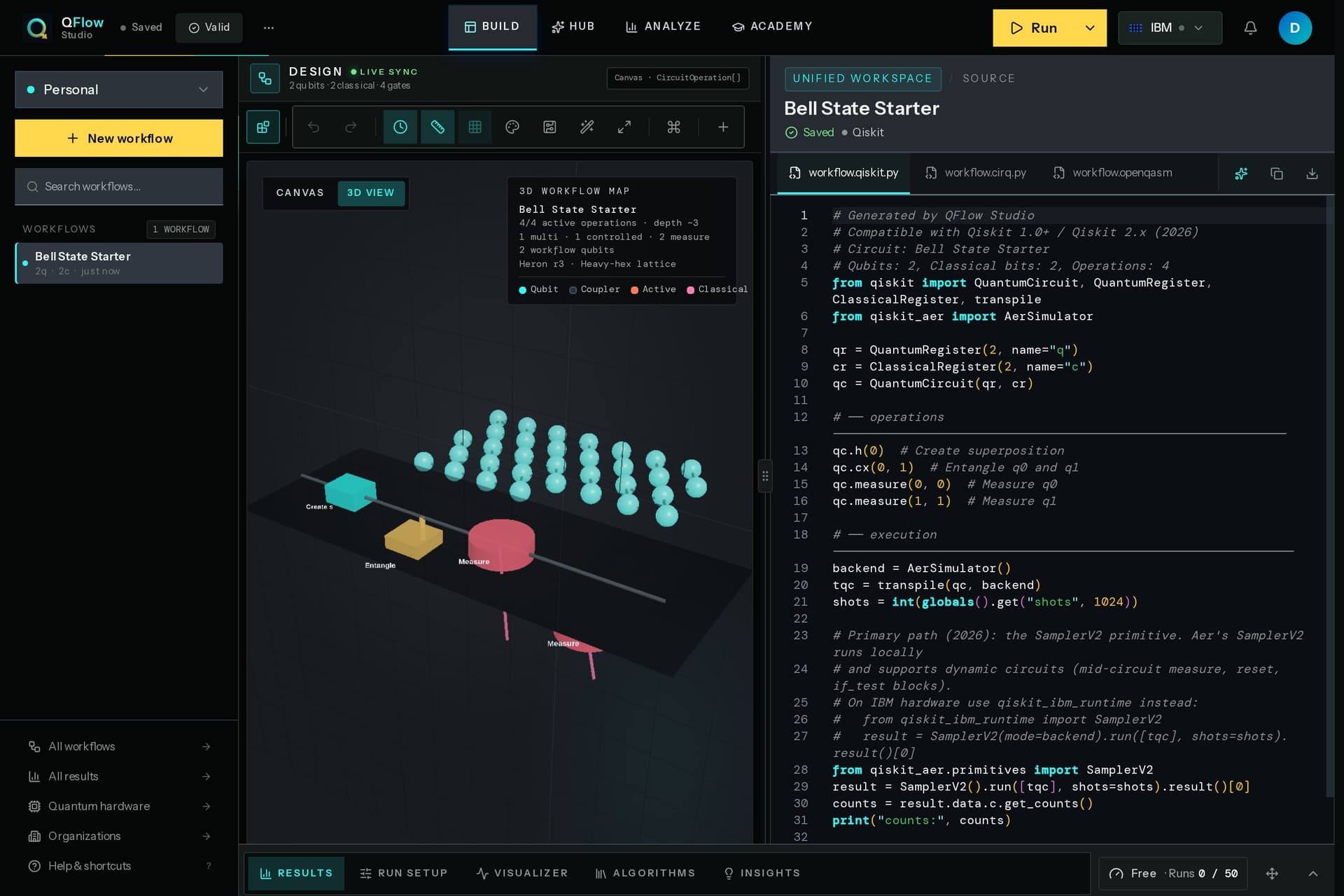
Sign in
Open navigation
EnglishTechnical guideReviewed Aug 20, 2026
Technical workflow guide
Hybrid quantum-classical workflows
Hybrid workflows coordinate classical optimization, accelerated simulation, quantum execution, and result analysis as one operational loop.
What the page helps answer
Map hybrid loops
What the page helps answer
Map hybrid loops
Coordinate classical and QPU work
Track intermediate artifacts
Prepare technical review
Modern quantum work often iterates between classical compute and quantum resources. That makes workflow state, routing, and evidence more important than a single execution button.
QFlow gives teams a visible loop for intent, code, route, run, analyze, and approve.
Topic decision guide
Use this page as an operating brief, not only a definition.
Hybrid workflows coordinate classical optimization, accelerated simulation, quantum execution, and result analysis as one operational loop.
Evidence checklist
Name the workflow goal before choosing a provider or SDK route.
Keep the circuit, generated source, simulation notes, run state, and result evidence in one record.
Separate independent ecosystem references from affiliation, certification, replacement, or partner claims.
Link the reader to docs, source-backed analysis, or a bounded pilot only after the decision context is clear.
Questions this topic should answer
What is hybrid quantum-classical workflow?
Hybrid workflows coordinate classical optimization, accelerated simulation, quantum execution, and result analysis as one operational loop. In QFlow, the practical record keeps the objective, circuit or model, simulation check, provider route, run status, result analysis, and reviewer-safe evidence together.
How should a team evaluate Hybrid quantum-classical workflows?
Start from this page intent: Hybrid workflows coordinate classical optimization, accelerated simulation, quantum execution, and result analysis as one operational loop. Then verify whether the workflow can produce the outcomes listed here before moving into docs, analysis, or a pilot request.
Which ecosystems are relevant to hybrid quantum-classical workflow?
This page references NVIDIA CUDA-Q, IBM Quantum, AWS Braket, Azure Quantum, Classiq as independent ecosystem context and links source notes so readers can verify terminology without confusing QFlow with an official provider claim.
Loop design
01A hybrid loop may start with Python preparation, move through a simulator or GPU-accelerated path, submit to a cloud QPU, then feed results back into a classical optimizer.
The workflow record should show which step produced each artifact.
Why evidence matters
02Hybrid work produces many intermediate states. Reviewers need to know which parameters, provider route, and result set belong together.
QFlow keeps those artifacts tied to the same decision trail.
Independent ecosystem context
Independent ecosystem context
QFlow Studio is independent. IBM Quantum, Qiskit, AWS Braket, Azure Quantum, NVIDIA CUDA-Q, Cirq, Classiq, and Quantinuum Nexus are trademarks or products of their respective owners.
NVIDIA CUDA-Q
Referenced only as ecosystem context for workflow, learning, routing, or comparison intent.
IBM Quantum
Referenced only as ecosystem context for workflow, learning, routing, or comparison intent.
AWS Braket
Referenced only as ecosystem context for workflow, learning, routing, or comparison intent.
Azure Quantum
Referenced only as ecosystem context for workflow, learning, routing, or comparison intent.
Classiq
Referenced only as ecosystem context for workflow, learning, routing, or comparison intent.
2026 source notes
Source-backed terminology.
These public sources shape the terminology and search intent for this page.
QFlow Studio
Continue from the topic page into docs, source-backed blog analysis, or a bounded pilot request.