 Featured analysis
QFlow News & Research
Product news and current quantum workflow analysis.
Follow QFlow product releases, community pilots, and sourced 2026 reads on provider readiness, hybrid execution, review evidence, and the operating layer quantum teams need.
Featured analysis3 chapters6 sources8 images
education2026-09-025 min read
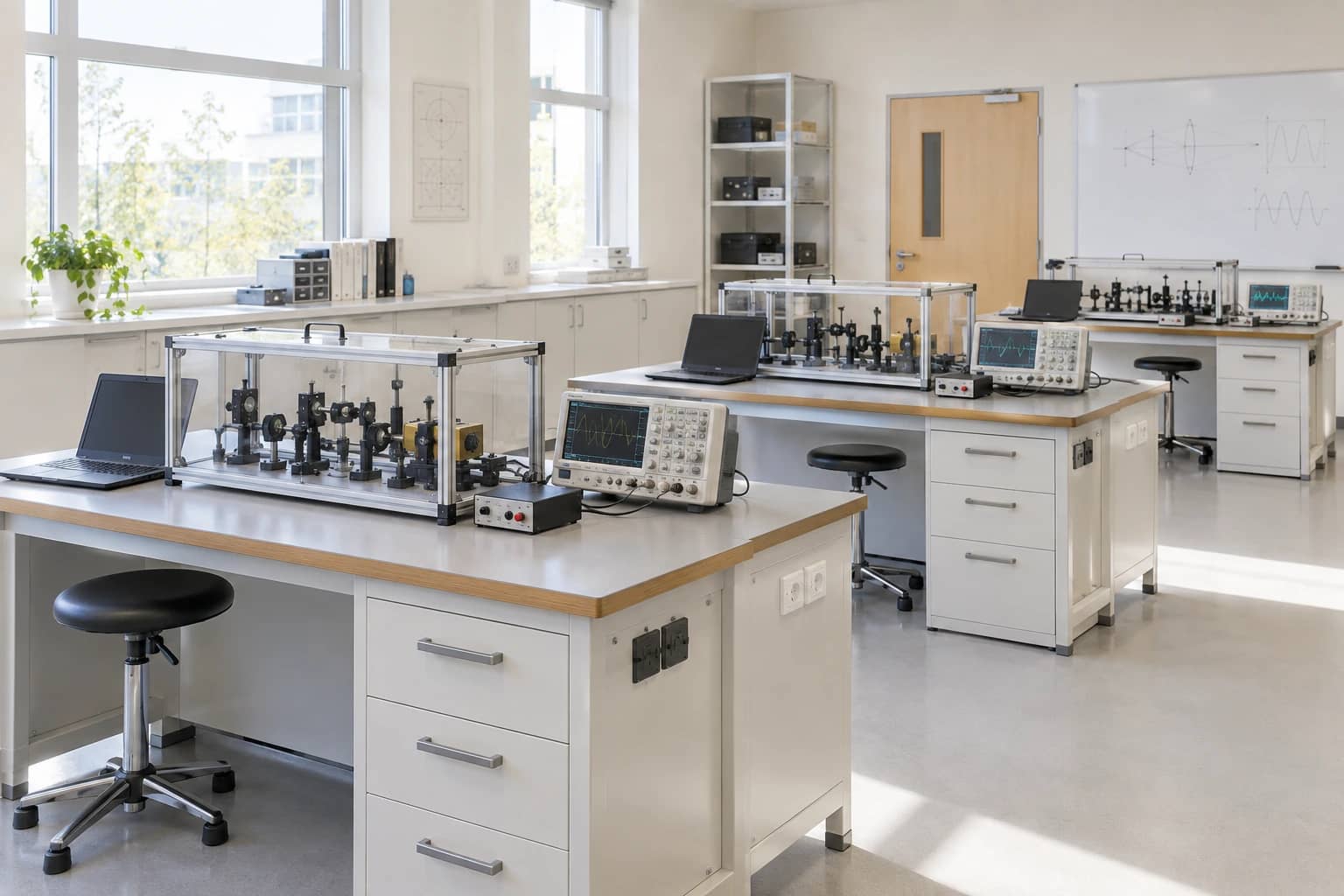
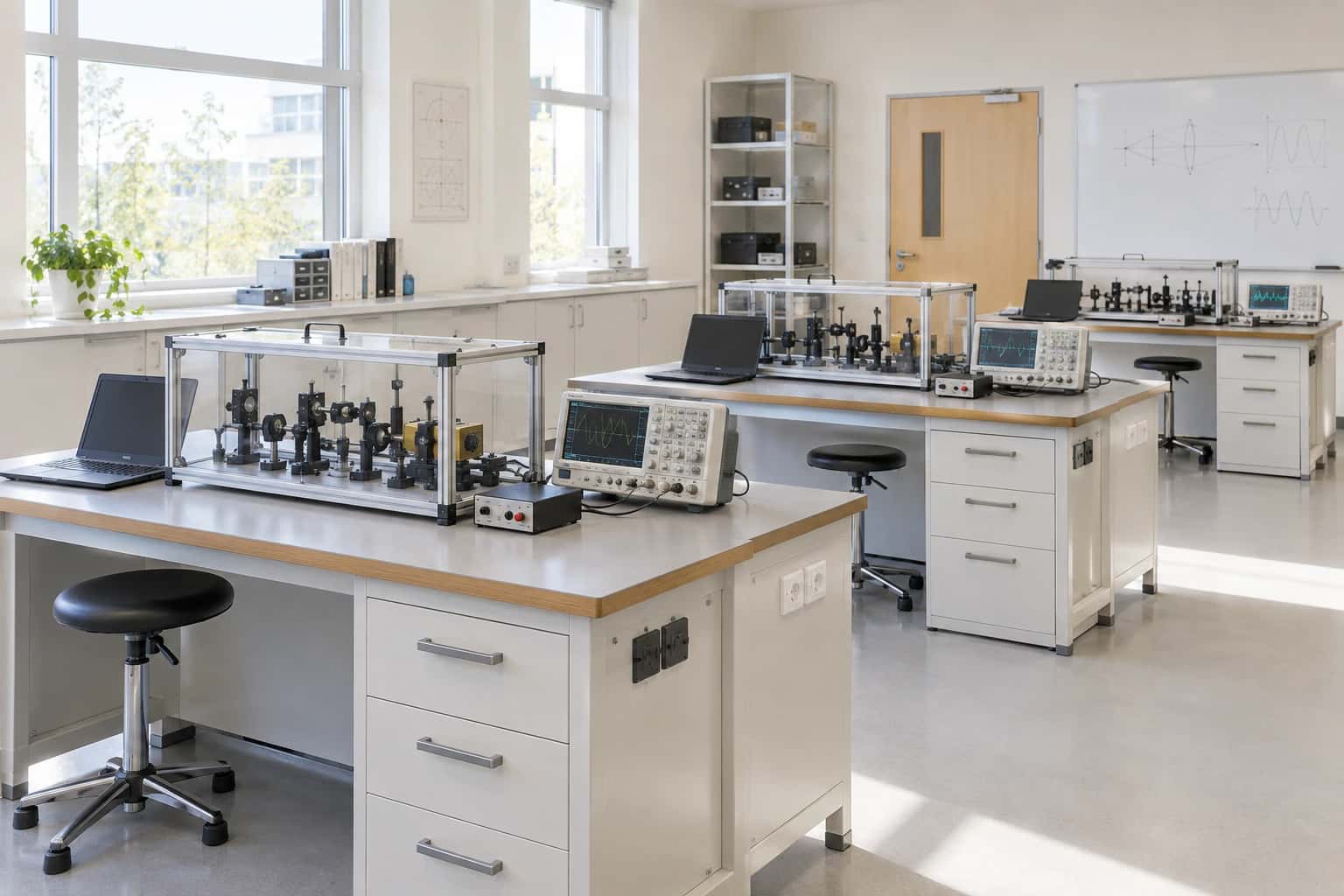
QFlow begins a community test pilot with Quantum Hacettepe
The scoped pilot will test how visual circuits, synchronized code, simulation evidence, and guided learning hold up in real student-team workflows.
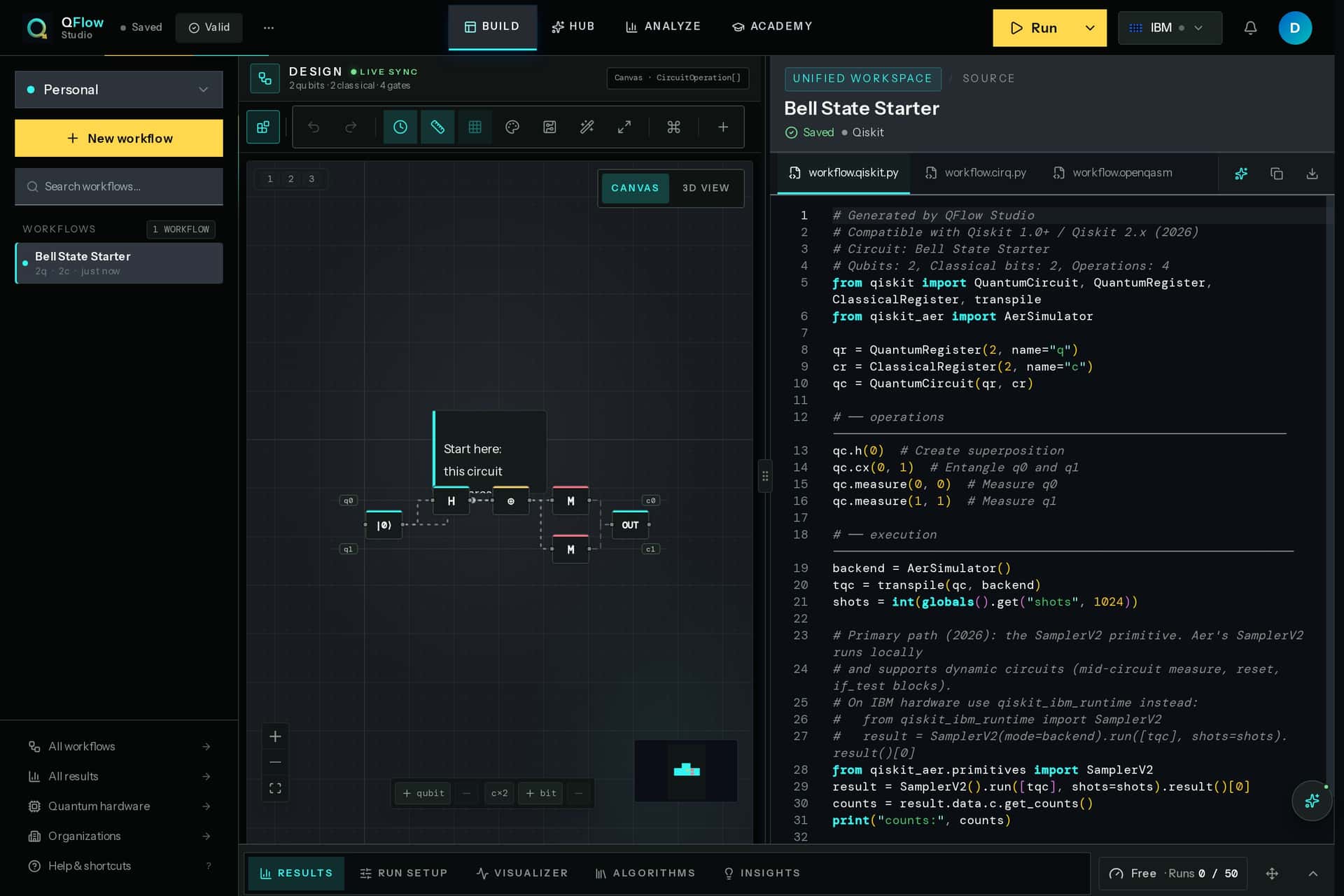
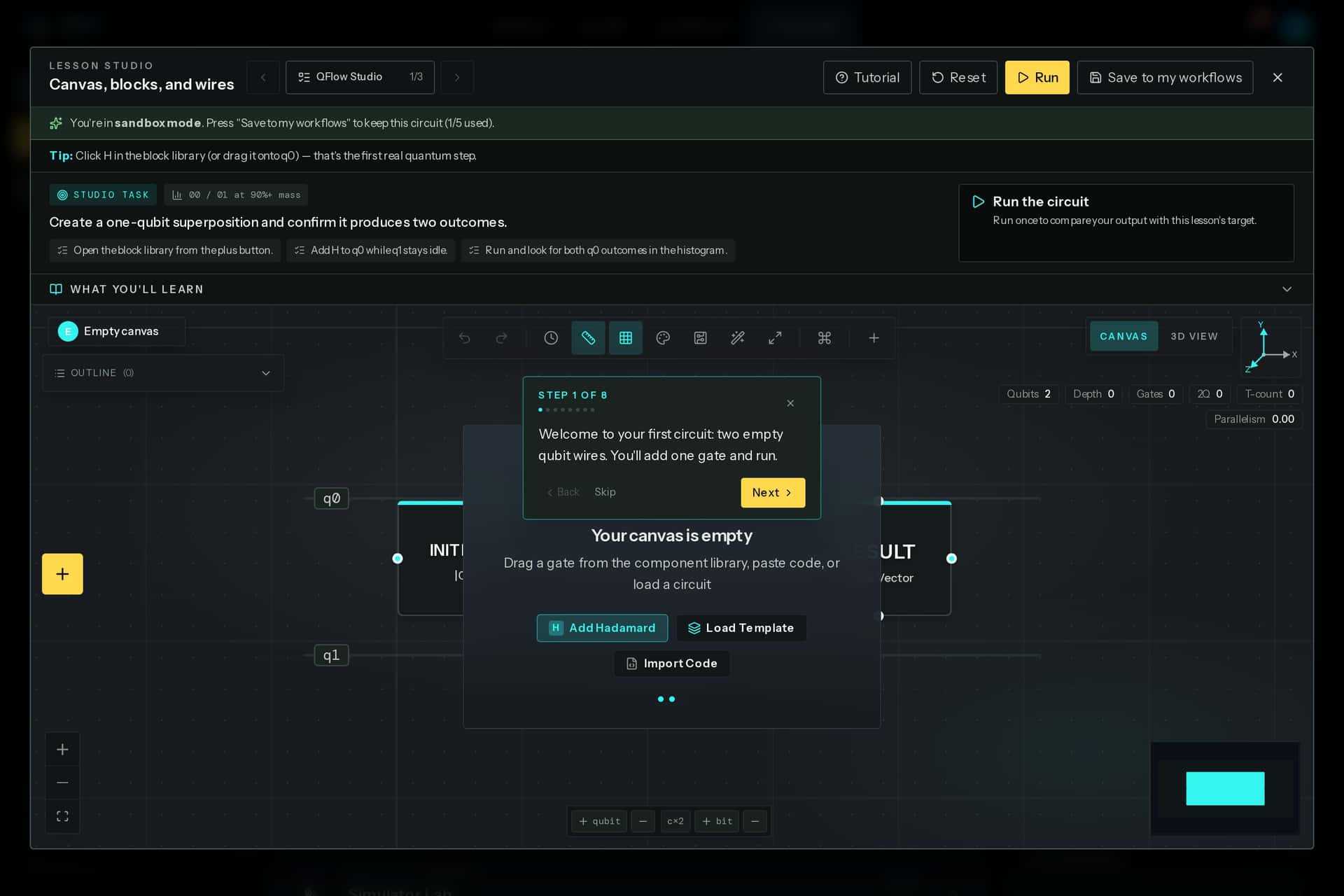
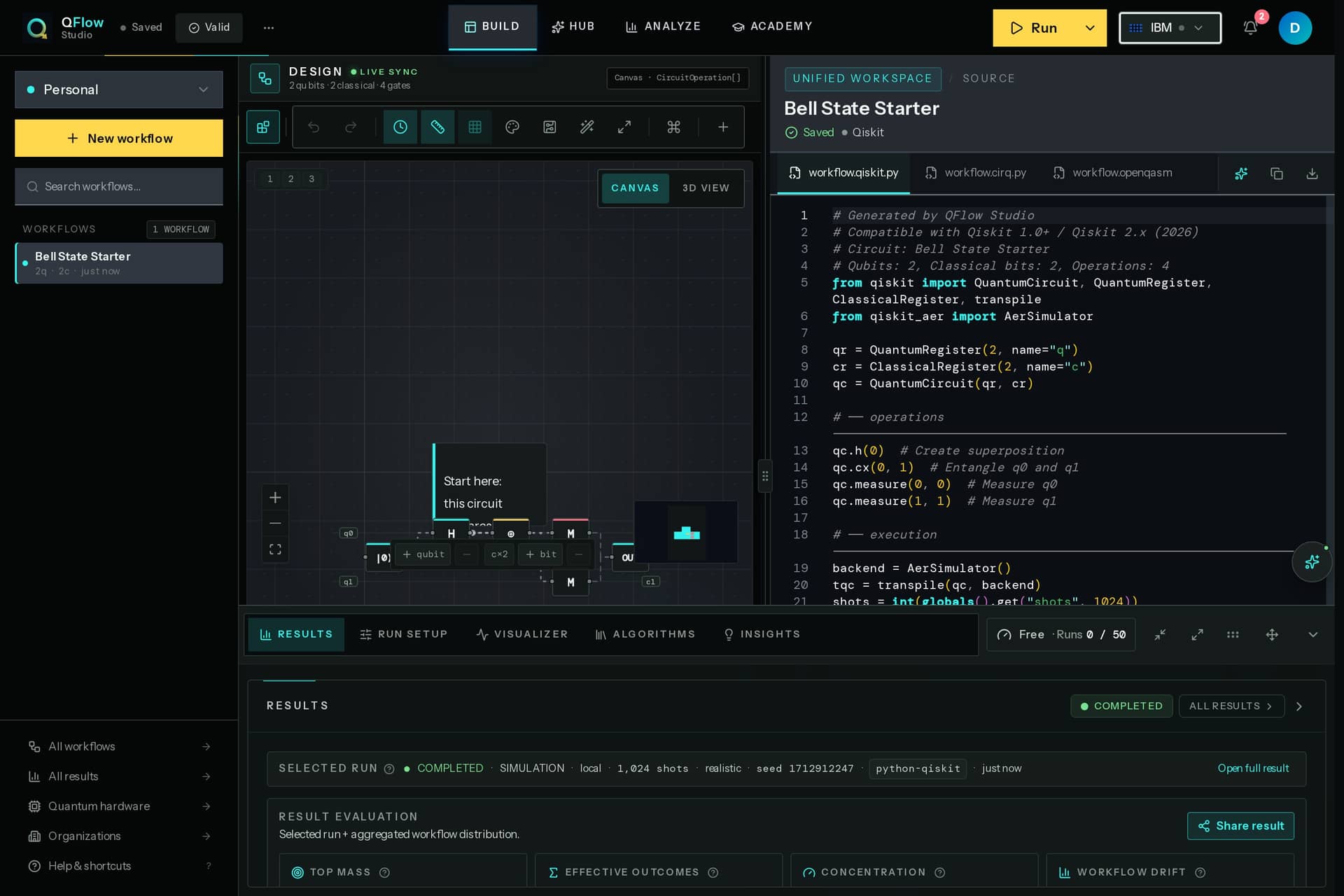
QFlow Studio and the Quantum Hacettepe student community are beginning a bounded test pilot focused on the daily work between learning a circuit and producing reviewable run evidence. Participants will work with the same circuit in Design and Code, use simulation before scarce hardware, and record concrete feedback on clarity, reliability, and team handoff. The pilot is a community product-testing program; it does not represent a university-wide deployment or institutional endorsement by Hacettepe University.
What this covers
Why this pilot existsWhat participants will actually testHow feedback becomes a product decision

QFlow NewsQuantum HacettepeQuantum educationQuantum workflow
Research library
Showing 1-10 of 36 guides, 10 articles per page.
8 images
education2026-06-024 min read
Quantum learning platform workflows 2026: lessons to proof
A practical SEO guide to quantum learning platforms that turn lessons, circuit practice, provider context, certificates, and review evidence into one path.
Quantum learning platform searches are often mixed with quantum machine learning and general quantum computing courses. QFlow should disambiguate the intent: this page is about learning quantum computing through practical workflows. A strong platform should connect lessons, visual circuits, generated source, simulator practice, provider context, badges or certificates, and proof records that instructors or team le...
What this covers
Disambiguate quantum learningLessons should produce runnable artifactsCertificates need evidence behind them
8 images
workflow2026-06-024 min read
Quantum circuit workflow builder 2026: visual blocks to code
A source-backed guide for searchers comparing visual quantum circuit builders, Qiskit code generation, OpenQASM, provider routing, and run proof.
A quantum circuit workflow builder should help users move from visual blocks to generated code, parser-verified operations, provider or simulator routing, and evidence. The high-intent search terms are practical: visual quantum circuit builder, quantum circuit builder with Qiskit, OpenQASM circuit builder, drag and drop quantum circuit simulator, and quantum circuit workflow. QFlow should answer by showing the ful...
What this covers
The builder should keep three representations synchronizedOpenQASM and Qiskit give the builder inspectable outputsDrag and drop is the entry point, not the finish line
8 images
workflow2026-06-024 min read
QFlow quantum workflow software 2026: canvas to proof
A brand-safe guide to QFlow Studio as an independent quantum workflow and learning layer for visual circuits, synced source, provider routes, and evidence.
QFlow Studio should rank for qualified branded searches such as qflow studio, qflow quantum workflow, qflow circuit builder, and qflow quantum learning rather than the ambiguous bare word qflow. The public page should state what QFlow Studio is: an independent operating layer that connects a visual quantum workflow canvas, synced Qiskit/Cirq/OpenQASM source, provider route context, run state, learning progress, an...
What this covers
Use QFlow Studio, not bare QFlow aloneThe product promise is canvas to proofBrand pages should be independent and factual
8 images
workflow2026-06-025 min read
What is quantum workflow software? 2026 operating guide
A practical definition of quantum workflow software for teams comparing circuit builders, SDKs, provider routing, run evidence, and learning records.
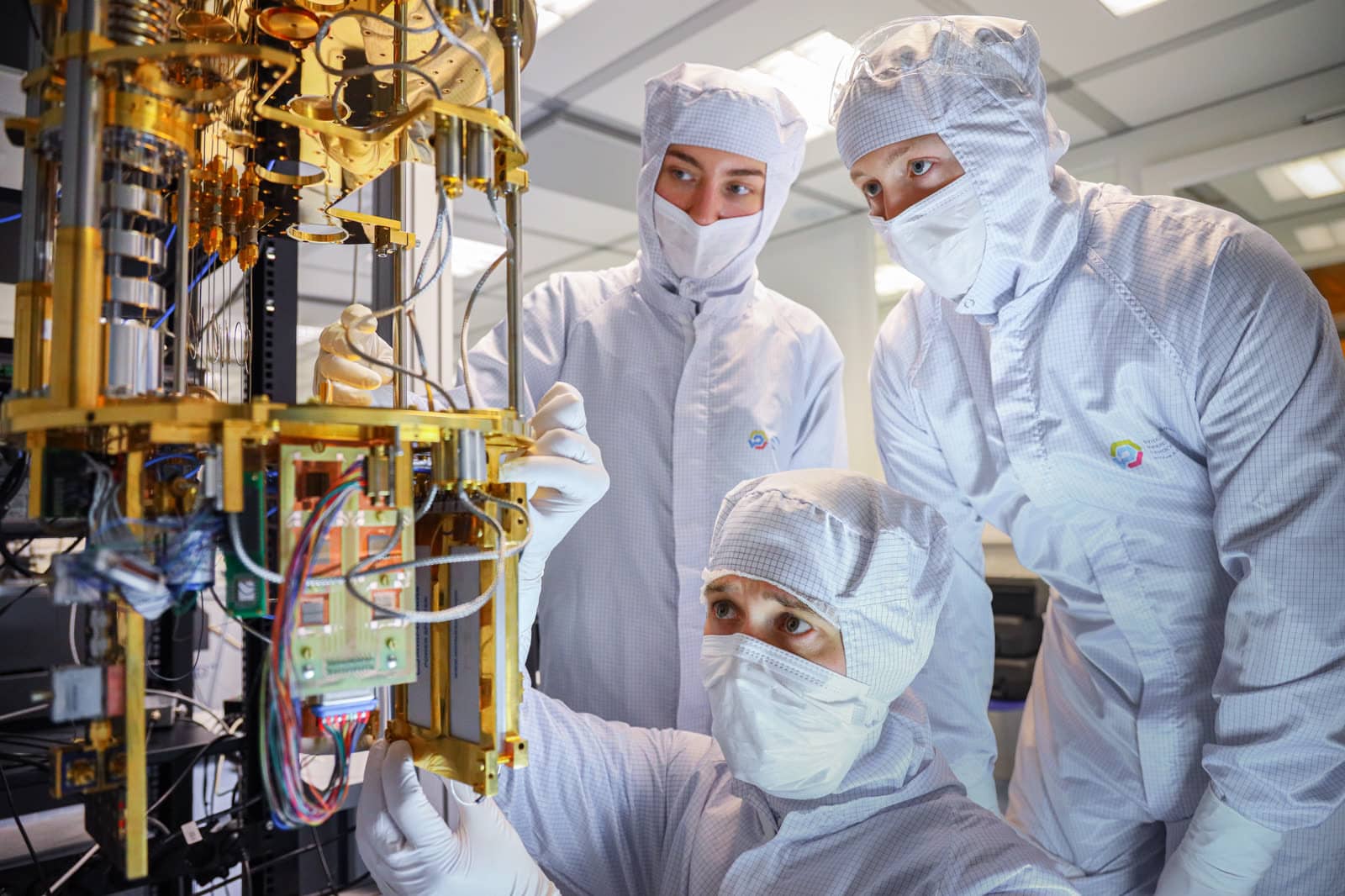
Quantum workflow software is the operating layer that keeps intent, visual circuit design, generated code, provider route, execution state, result artifacts, and reviewer-safe evidence in one durable record. In 2026, the useful definition is broader than a circuit editor and more concrete than a generic quantum platform. It should answer how a team moves from idea to proof without losing context across Qiskit, Ope...
What this covers
Definition: quantum workflow softwareWhy a circuit builder is only one stageProvider routing needs evidence, not screenshots
8 images
hardware2026-06-024 min read
Quantum RF sensing for defense 2026: field-ready evidence
A public-source guide to Rydberg RF sensing, robust quantum sensors, atomic receivers, defense caveats, lawful spectrum use, and validation evidence.
Quantum RF sensing and defense content needs public-source discipline. Rydberg atom receivers, atom-based antennas, robust quantum sensors, and programs such as DARPA Quantum Apertures are real signals, but a responsible article should avoid sensitive mission guidance or interception claims. QFlow should focus on validation evidence: environment, sensor state, calibration, legal use boundary, comparison, and revie...
What this covers
Quantum RF sensing is about validationRydberg receivers are moving from lab demos to productsDefense-safe content avoids operational recipes
8 images
operations2026-06-024 min read
Quantum telecom networks 2026: QKD, PQC, and 6G evidence
A practical telecom guide to EuroQCI, satellite and free-space QKD, optical ground stations, PQC for non-terrestrial networks, and 6G security.
Quantum telecom in 2026 is not one thing. EuroQCI, satellite QKD, optical ground stations, free-space links, PQC for non-terrestrial networks, and quantum-safe 6G all matter, but each sits in a different operating lane. QFlow should help teams keep QKD, PQC, network architecture, standards, and evidence separate enough to make defensible decisions.
What this covers
Quantum telecom is a network architecture problemEuroQCI shows the infrastructure laneSatellite and free-space QKD need caveats
8 images
education2026-06-024 min read
Quantum healthcare and drug discovery 2026: evidence map
A current map of Q4Bio, protein-ligand simulations, quantum chemistry, oncology workflows, clinical caveats, and healthcare evidence packets.
Quantum healthcare in 2026 has real research momentum, especially around Q4Bio, quantum chemistry, oncology-oriented workflows, and large protein-ligand simulations. The safe interpretation is still preclinical and computational. QFlow should help teams separate demonstrated quantum-classical workflow scale from clinical utility, drug approval, or treatment claims.
What this covers
Healthcare quantum is evidence-rich but earlyQ4Bio created a useful benchmark cultureProtein-ligand simulations need context
8 images
education2026-06-024 min read
Quantum biology and CRISPR workflows 2026: hype-free guide
A careful guide to quantum biology, quantum CRISPR claims, genomics, omics, cell-based therapeutics, biosensors, and what evidence teams should keep.
Quantum biology and quantum CRISPR content must be careful. Current evidence supports quantum tools for biology questions such as omics analysis, biosensing, molecular simulation, optimization, and workflow evidence. It does not support a claim that quantum computers perform clinical gene editing or make CRISPR safe by themselves. QFlow should own the hype-free version: what problem is modeled, what quantum method...
What this covers
Quantum CRISPR should be an analysis phraseGenomics needs rigorous data-loading assumptionsSingle-cell omics is a practical frontier
8 images
hardware2026-06-024 min read
Quantum AI control plane 2026: calibration, QML, and proof
A source-backed operating guide to quantum AI across calibration models, decoder assistance, QPU-GPU feedback loops, QML claims, and evidence review.
Quantum AI in 2026 is strongest as a control plane, not as a vague claim that quantum replaces artificial intelligence. The credible work is calibration interpretation, decoder assistance, QPU-GPU feedback, QML benchmark review, and evidence preservation. QFlow should help teams record the model, data, route, run, and human decision before an AI suggestion changes a quantum workflow.
What this covers
Quantum AI is becoming the control planeCalibration and decoding are real AI targetsQPU-GPU loops need runtime boundaries
8 images
operations2026-05-304 min read
AI agents for quantum workflows 2026: calibration to proof
A practical Q&A for agentic quantum workflows across calibration, decoder review, QPU-GPU callbacks, QML experiments, and evidence packets.
AI agents for quantum workflows in 2026 are useful when they operate as bounded control-plane assistants: reading calibration plots, reviewing decoder suggestions, coordinating QPU-GPU callbacks, comparing QML experiments, and preserving human approval. QFlow should keep the agent, model, data, route, run, and decision together so quantum AI work stays auditable instead of becoming another opaque automation layer.
What this covers
How should AI agents operate quantum workflows?Calibration is the first credible agent laneDecoder assistance needs latency and provenance
Complete crawlable archive
Every published analysis, linked from one maintained index.
Pagination keeps the visual library manageable. This compact archive keeps every canonical article directly discoverable for readers, search engines, and retrieval tools.
- 01education · 2026-09-02QFlow begins a community test pilot with Quantum Hacettepe
- 02education · 2026-06-02Quantum learning platform workflows 2026: lessons to proof
- 03workflow · 2026-06-02Quantum circuit workflow builder 2026: visual blocks to code
- 04workflow · 2026-06-02QFlow quantum workflow software 2026: canvas to proof
- 05workflow · 2026-06-02What is quantum workflow software? 2026 operating guide
- 06hardware · 2026-06-02Quantum RF sensing for defense 2026: field-ready evidence
- 07operations · 2026-06-02Quantum telecom networks 2026: QKD, PQC, and 6G evidence
- 08education · 2026-06-02Quantum healthcare and drug discovery 2026: evidence map
- 09education · 2026-06-02Quantum biology and CRISPR workflows 2026: hype-free guide
- 10hardware · 2026-06-02Quantum AI control plane 2026: calibration, QML, and proof
- 11operations · 2026-05-30AI agents for quantum workflows 2026: calibration to proof
- 12operations · 2026-05-30Quantum pilot evidence packet questions 2026
- 13operations · 2026-05-30D-Wave quantum annealing workflow questions 2026
- 14workflow · 2026-05-30Classiq Qmod quantum workflow questions 2026
- 15hardware · 2026-05-30Quantinuum Nexus and pytket workflow questions 2026
- 16education · 2026-05-30Cirq and OpenFermion workflow questions 2026
- 17hardware · 2026-05-30CUDA-Q hybrid quantum workflow questions 2026
- 18workflow · 2026-05-30Azure Quantum resource estimation questions 2026
- 19workflow · 2026-05-30Amazon Braket Hybrid Jobs workflow questions 2026
- 20workflow · 2026-05-30Qiskit Runtime workflow questions 2026: evidence guide
- 21operations · 2026-05-30Post-quantum security migration evidence 2026
- 22hardware · 2026-05-30Dynamic quantum circuit benchmarking 2026: real workflows
- 23hardware · 2026-05-30AI for quantum calibration and control: 2026 workflow layer
- 24hardware · 2026-05-30Quantum error correction roadmap 2026: qLDPC and decoders
- 25education · 2026-05-30Quantum research categories 2026: what teams should track
- 26operations · 2026-05-30Qiskit, Braket, Azure, and CUDA-Q workflow comparison 2026
- 27education · 2026-05-30Quantum learning workflows 2026: teach with real evidence
- 28workflow · 2026-05-30Quantum workflow operating questions 2026: route to proof
- 29workflow · 2026-05-26Quantum computing developments in 2026: the operating picture
- 30operations · 2026-05-26Highest-valued quantum computing companies in 2026
- 31operations · 2026-05-26The most important quantum computing companies in 2026
- 32education · 2026-05-26Quantum computing research in 2026: the signals that matter
- 33workflow · 2026-05-26Best quantum computing products in 2026: the operating shortlist
- 34education · 2026-05-25Provider roadmaps make pilot readiness a board-level question
- 35operations · 2026-05-25Hybrid quantum teams are optimizing iteration loops
- 36hardware · 2026-05-25Hardware evidence is becoming the buyer's interface
- 37workflow · 2026-05-25Quantum-centric workflows need an operating layer, not another notebook
Editorial standard
Source material should read like a decision guide.
The blog favors primary links, maintained articles, visual evidence, and chaptered analysis over short disconnected blocks.