Loading topics
Skip to content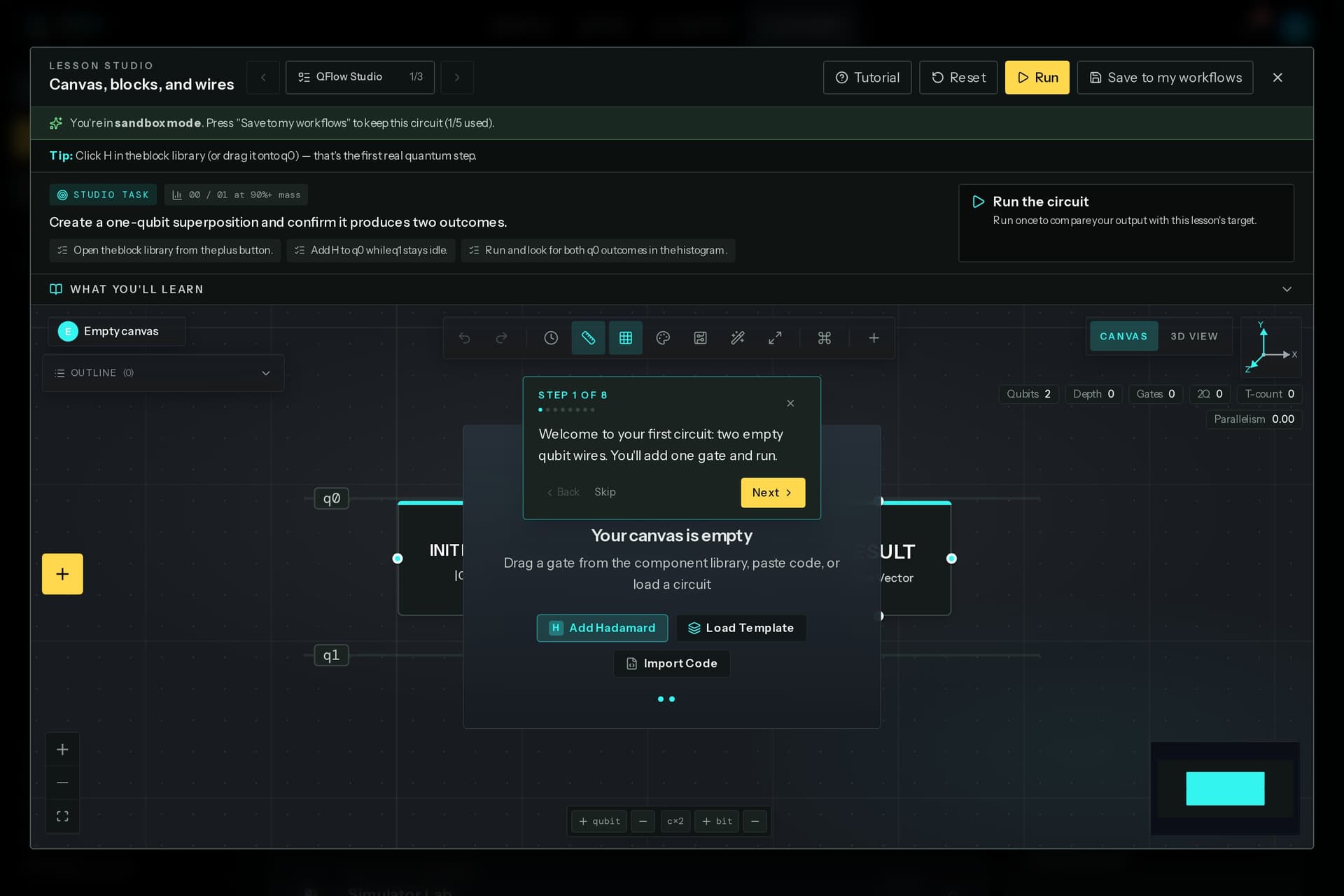
Sign in
Open navigation
EnglishLearningReviewed Aug 20, 2026
Learning hub
Quantum learning
Quantum learning can mean learning quantum computing, teaching circuits, or connecting lessons to executable workflows.
What the page helps answer
Separate education from quantum ML intent
What the page helps answer
Separate education from quantum ML intent
Design a lesson-to-run path
Track progress and certificates
Link learning with workflow practice
A strong learning path needs more than reading material. Learners need lessons, editable workflows, generated code, safe runs, feedback, and proof of progress.
QFlow connects academy content with the same workflow record used by research and product teams.
Topic decision guide
Use this page as an operating brief, not only a definition.
Quantum learning can mean learning quantum computing, teaching circuits, or connecting lessons to executable workflows.
Evidence checklist
Name the workflow goal before choosing a provider or SDK route.
Keep the circuit, generated source, simulation notes, run state, and result evidence in one record.
Separate independent ecosystem references from affiliation, certification, replacement, or partner claims.
Link the reader to docs, source-backed analysis, or a bounded pilot only after the decision context is clear.
Questions this topic should answer
What is quantum learning?
Quantum learning can mean learning quantum computing, teaching circuits, or connecting lessons to executable workflows. In QFlow, the practical record keeps the objective, circuit or model, simulation check, provider route, run status, result analysis, and reviewer-safe evidence together.
How should a team evaluate Quantum learning?
Start from this page intent: Quantum learning can mean learning quantum computing, teaching circuits, or connecting lessons to executable workflows. Then verify whether the workflow can produce the outcomes listed here before moving into docs, analysis, or a pilot request.
Which ecosystems are relevant to quantum learning?
This page references IBM Quantum Learning, Microsoft Azure Quantum, Qiskit, Cirq, OpenQASM as independent ecosystem context and links source notes so readers can verify terminology without confusing QFlow with an official provider claim.
Disambiguating quantum learning
01The phrase can refer to education, quantum machine learning, or learning theory. This page focuses on learning quantum computing through practical workflows.
Clear terminology helps searchers and AI assistants route to the right resource instead of mixing education and machine-learning intent.
From lesson to runnable artifact
02A useful lesson should leave behind a circuit, generated source, result, and reflection. That artifact makes progress visible to learners and instructors.
QFlow Academy records attempts, resources, badges, and certificates against workflow activity.
Independent ecosystem context
Independent ecosystem context
QFlow Studio is independent. IBM Quantum, Qiskit, AWS Braket, Azure Quantum, NVIDIA CUDA-Q, Cirq, Classiq, and Quantinuum Nexus are trademarks or products of their respective owners.
IBM Quantum Learning
Referenced only as ecosystem context for workflow, learning, routing, or comparison intent.
Microsoft Azure Quantum
Referenced only as ecosystem context for workflow, learning, routing, or comparison intent.
Qiskit
Referenced only as ecosystem context for workflow, learning, routing, or comparison intent.
Cirq
Referenced only as ecosystem context for workflow, learning, routing, or comparison intent.
OpenQASM
Referenced only as ecosystem context for workflow, learning, routing, or comparison intent.
2026 source notes
Source-backed terminology.
These public sources shape the terminology and search intent for this page.
QFlow Studio
Continue from the topic page into docs, source-backed blog analysis, or a bounded pilot request.