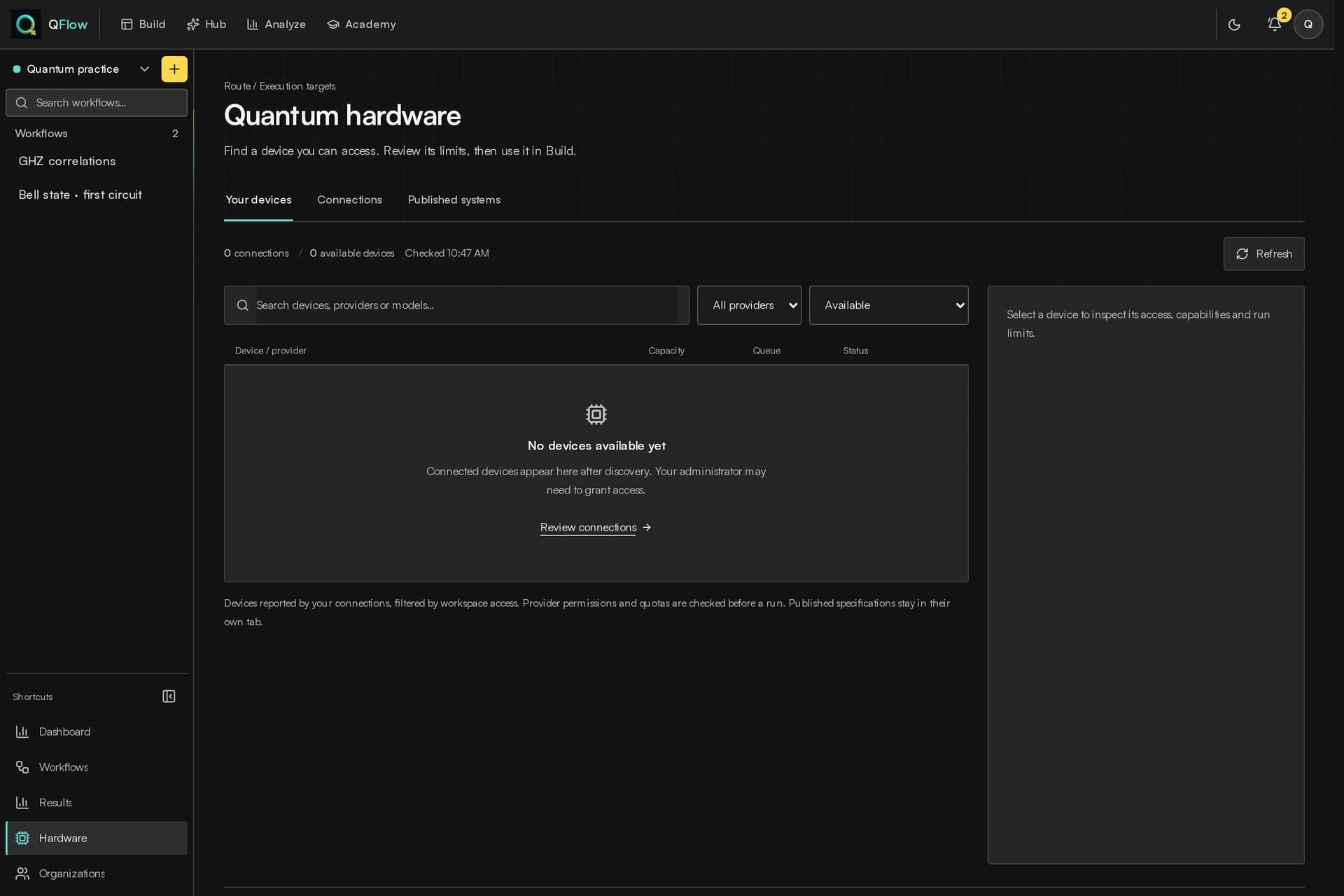
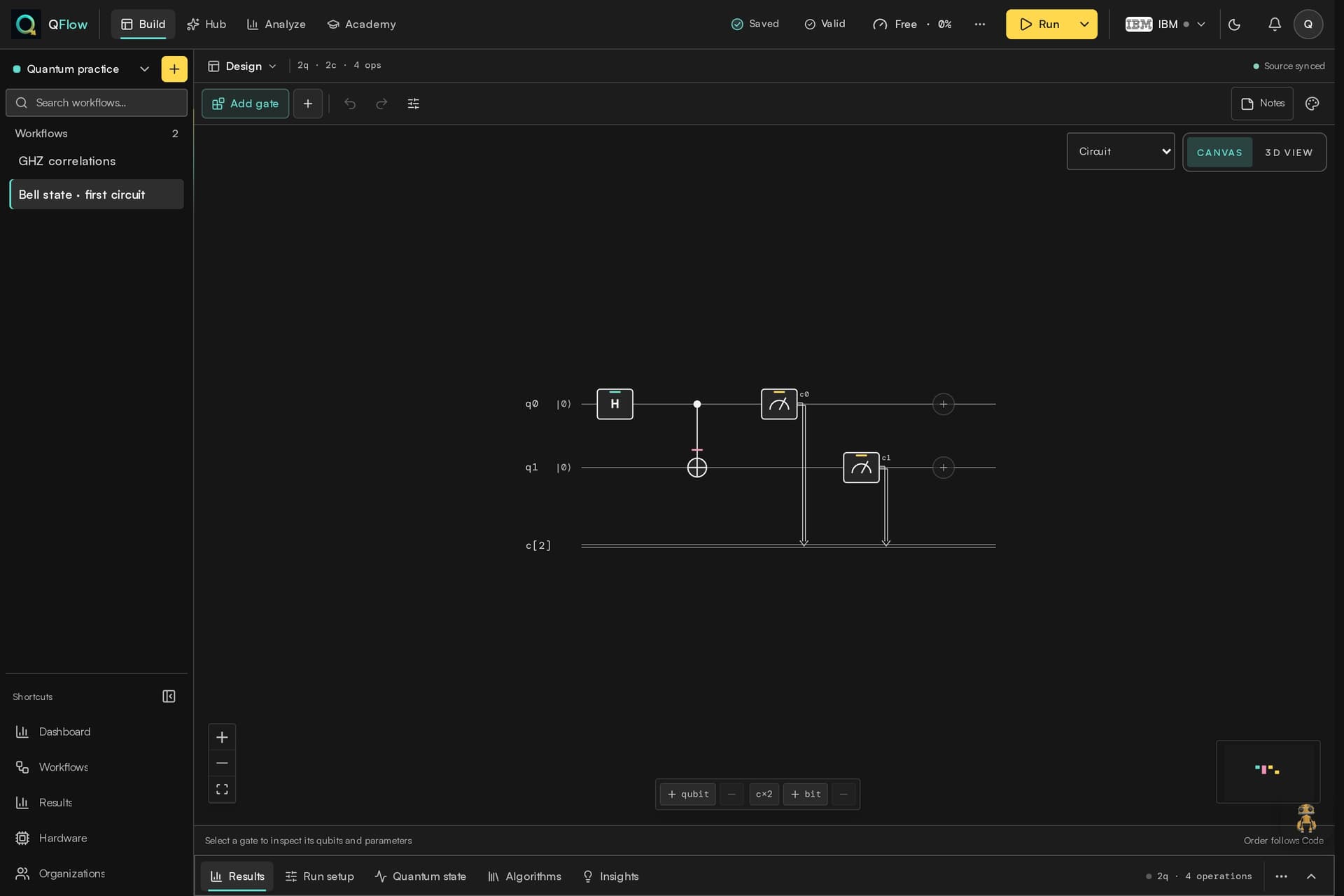
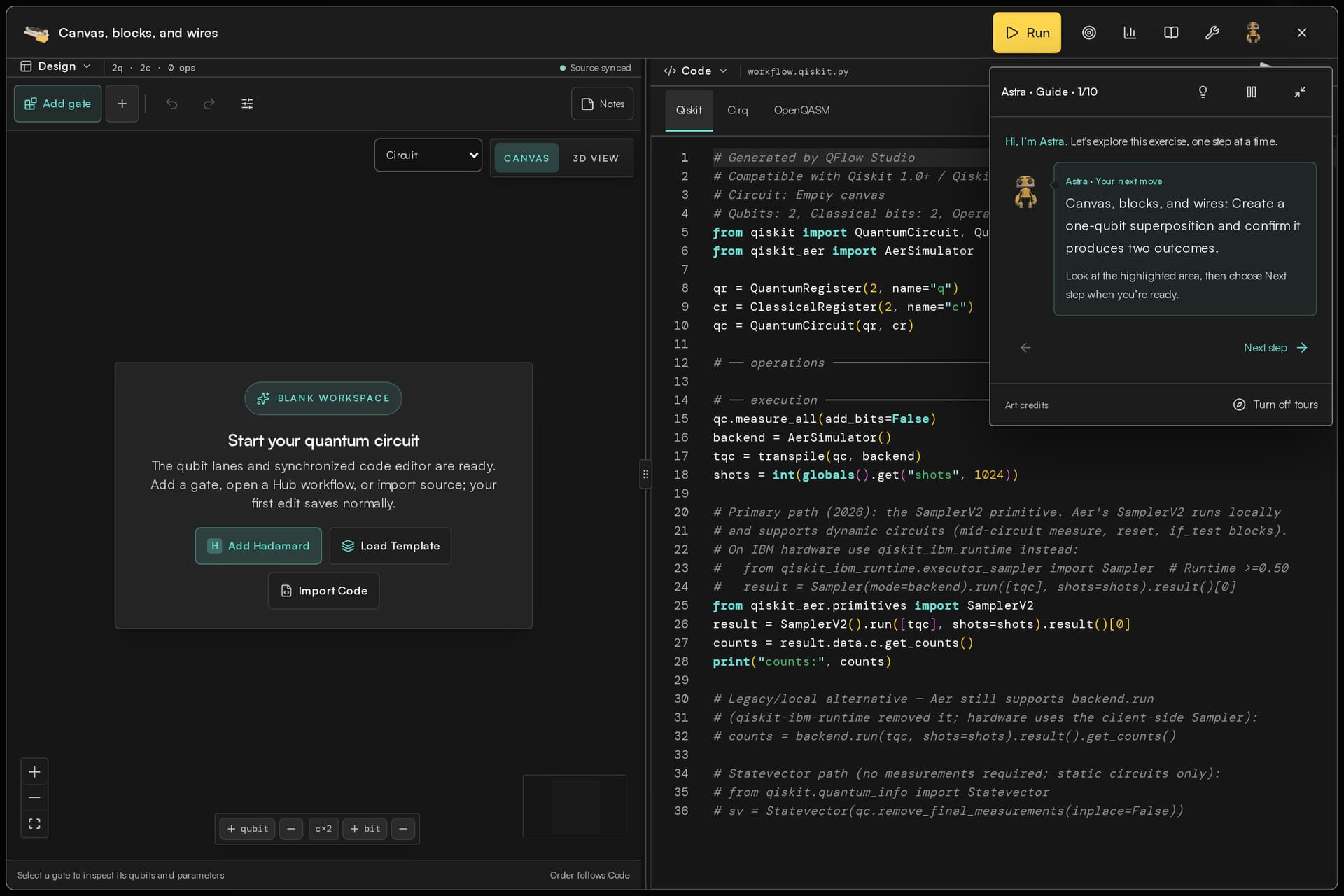
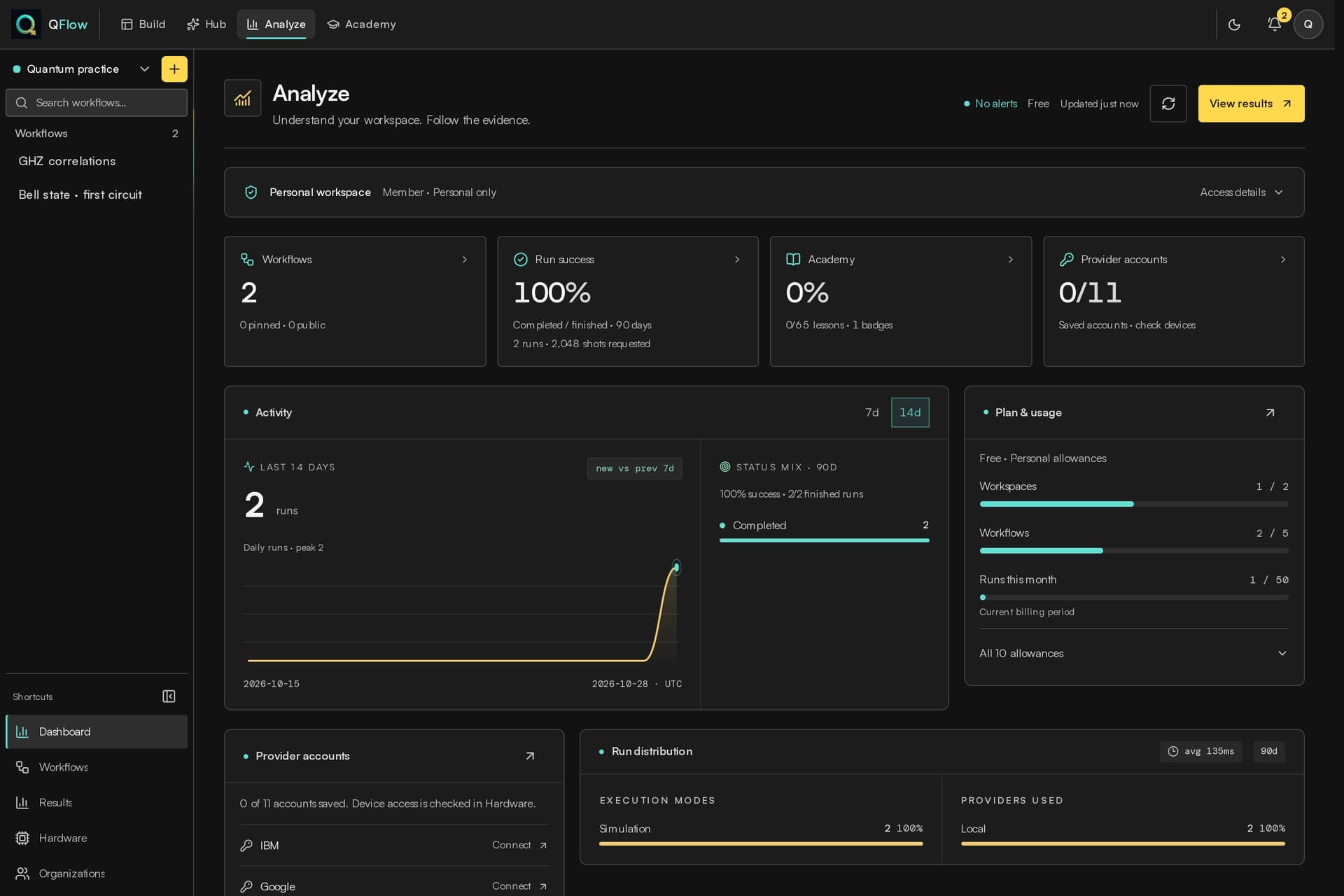
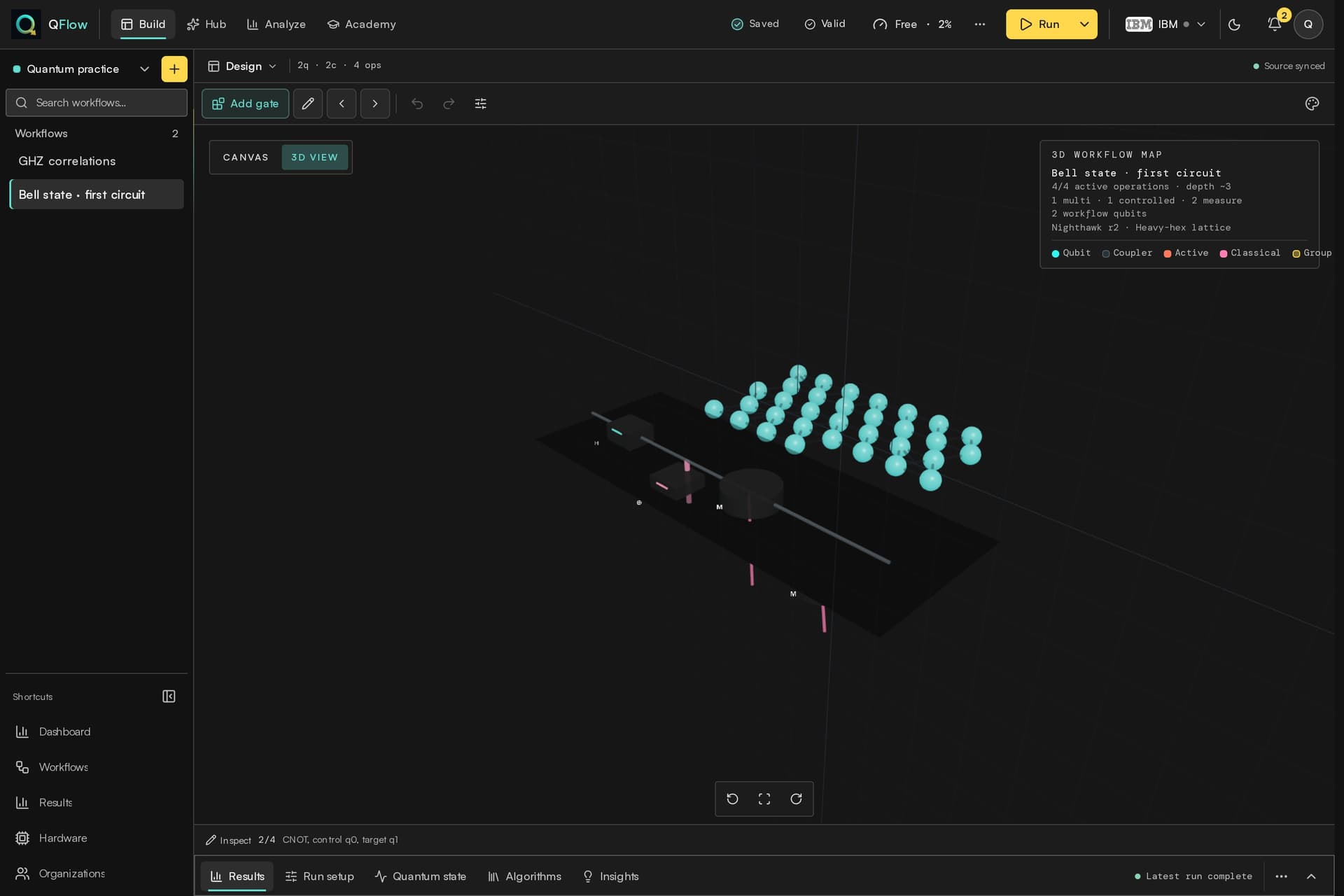
Compare quantum platforms by the workflow stage they support: design, SDK, simulation, provider access, execution, collaboration, learning, and evidence.
Platform comparison pages should be factual, visible, and careful with brands. The useful question is where each tool fits in the workflow, not whether one label can replace another.
QFlow is described here as an operating layer around provider and SDK ecosystems.
What the page helps answer
Compare by workflow stage
Use brand names safely
Link to official sources
Route users to QFlow fit
Topic decision guide
Use this page as an operating brief, not only a definition.
Evidence checklist
Name the workflow goal before choosing a provider or SDK route.
Keep the circuit, generated source, simulation notes, run state, and result evidence in one record.
Separate independent ecosystem references from affiliation, certification, replacement, or partner claims.
Link the reader to docs, source-backed analysis, or a bounded pilot only after the decision context is clear.
Questions this topic should answer
What is Qiskit workflow?
Compare quantum platforms by the workflow stage they support: design, SDK, simulation, provider access, execution, collaboration, learning, and evidence. In QFlow, the practical record keeps the objective, circuit or model, simulation check, provider route, run status, result analysis, and reviewer-safe evidence together.
How should a team evaluate Quantum platform workflow comparison?
Start from this page intent: Compare quantum platforms by the workflow stage they support: design, SDK, simulation, provider access, execution, collaboration, learning, and evidence. Then verify whether the workflow can produce the outcomes listed here before moving into docs, analysis, or a pilot request.
Which ecosystems are relevant to Qiskit workflow?
This page references IBM Quantum, Qiskit, AWS Braket, Azure Quantum, NVIDIA CUDA-Q, Cirq as independent ecosystem context and links source notes so readers can verify terminology without confusing QFlow with an official provider claim.
01
Compare by stage
Design tools, SDKs, managed hardware access, accelerated simulation, collaboration, and learning systems answer different questions.
A stage-based comparison helps buyers and researchers avoid false equivalence.
02
Safe brand-adjacent discovery
Use brand names only to identify the ecosystem or official tool, link to official documentation, and keep the page visibly independent.
Avoid official, certified, replacement, or partner language unless it is contractually true.
Independent ecosystem context
QFlow Studio is independent. IBM Quantum, Qiskit, AWS Braket, Azure Quantum, NVIDIA CUDA-Q, Cirq, Classiq, and Quantinuum Nexus are trademarks or products of their respective owners.
IBM Quantum
Qiskit
AWS Braket
Azure Quantum
NVIDIA CUDA-Q
Cirq
Classiq
Quantinuum Nexus
Referenced only as ecosystem context for workflow, learning, routing, or comparison intent.
Source-backed terminology.
These public sources shape the terminology and search intent for this page.