Commercial investigationEnglishReviewed Aug 20, 2026
Made to make ideas easier to explore.
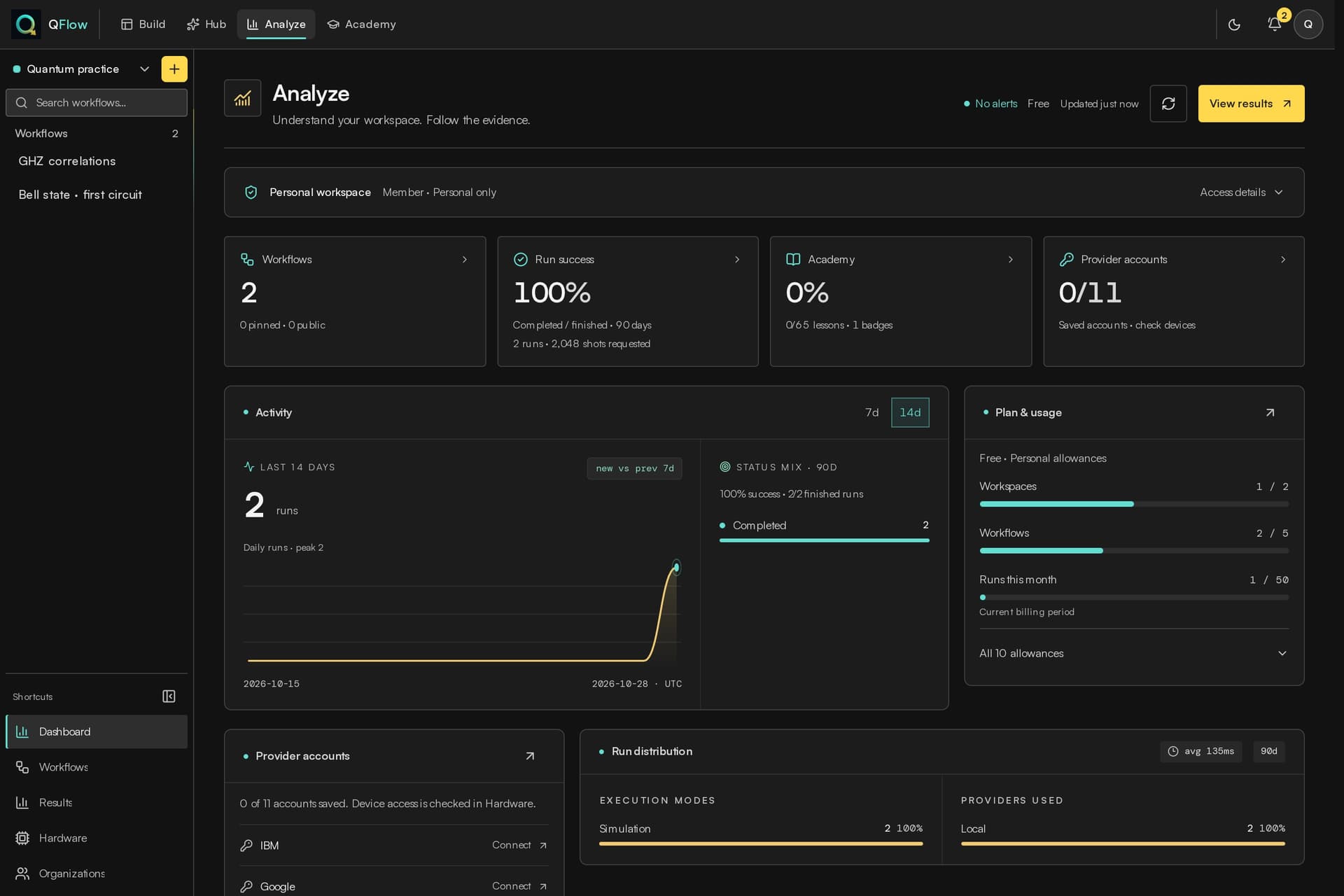
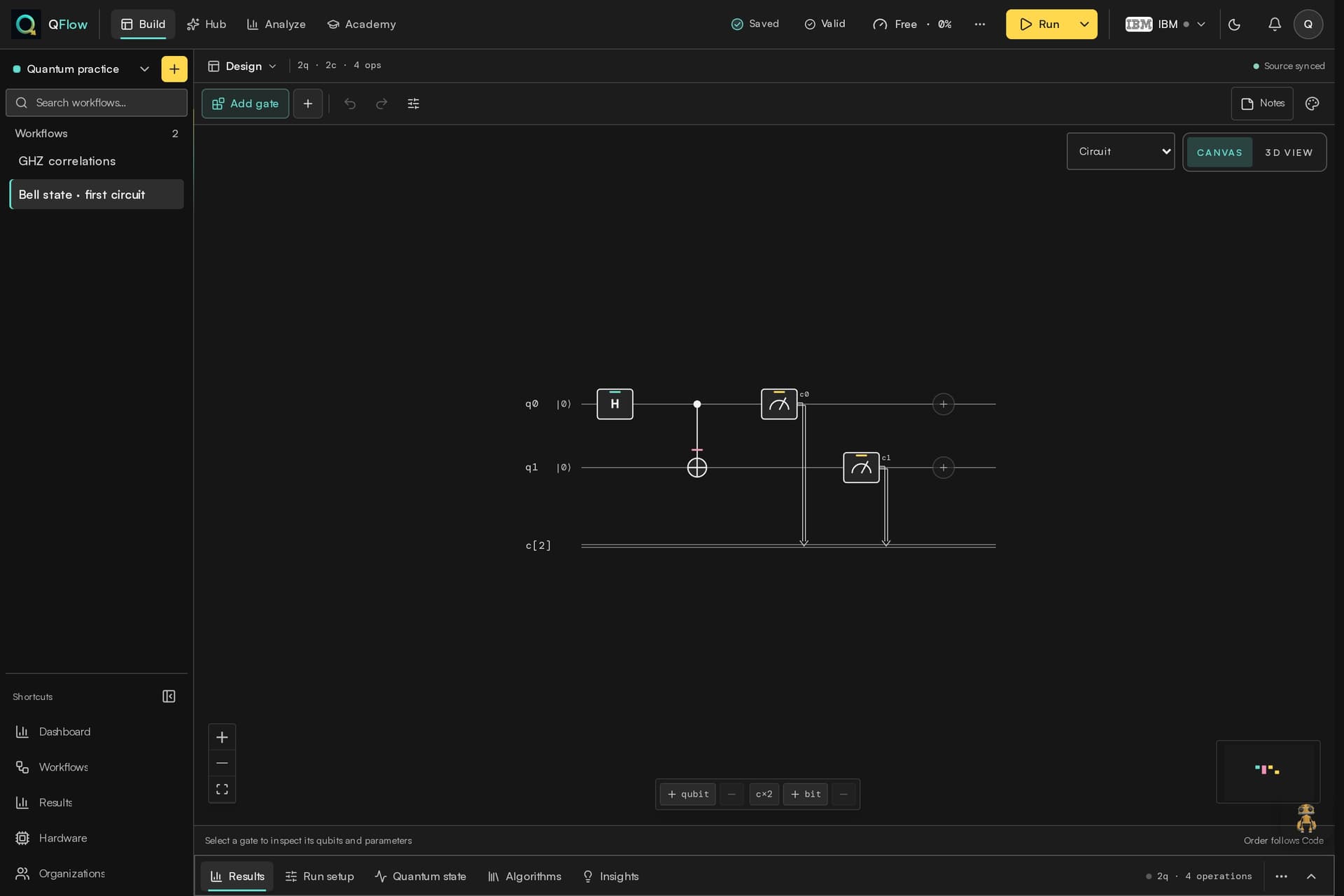
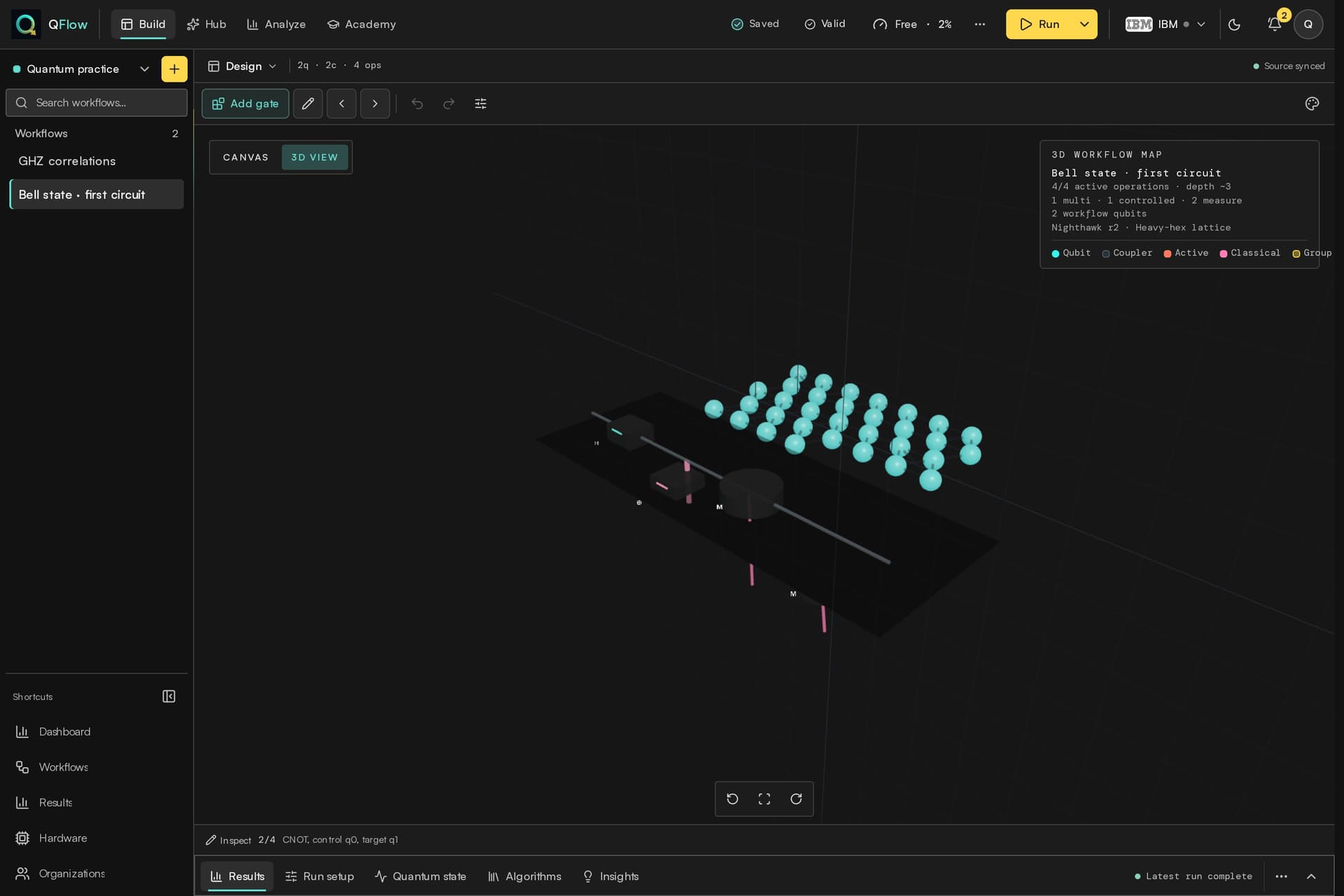
The question is not only whether a tool can draw a circuit. The stronger question is whether it can preserve context through simulation, provider execution, review, and learning operations.
QFlow positions itself as the operating layer around the quantum toolchain.
What the page helps answer
Build a buyer checklist
Compare workflow stages
Separate product layer from provider SDKs
Prepare pilot review
Topic decision guide
Use this page as an operating brief, not only a definition.
Evidence checklist
Name the workflow goal before choosing a provider or SDK route.
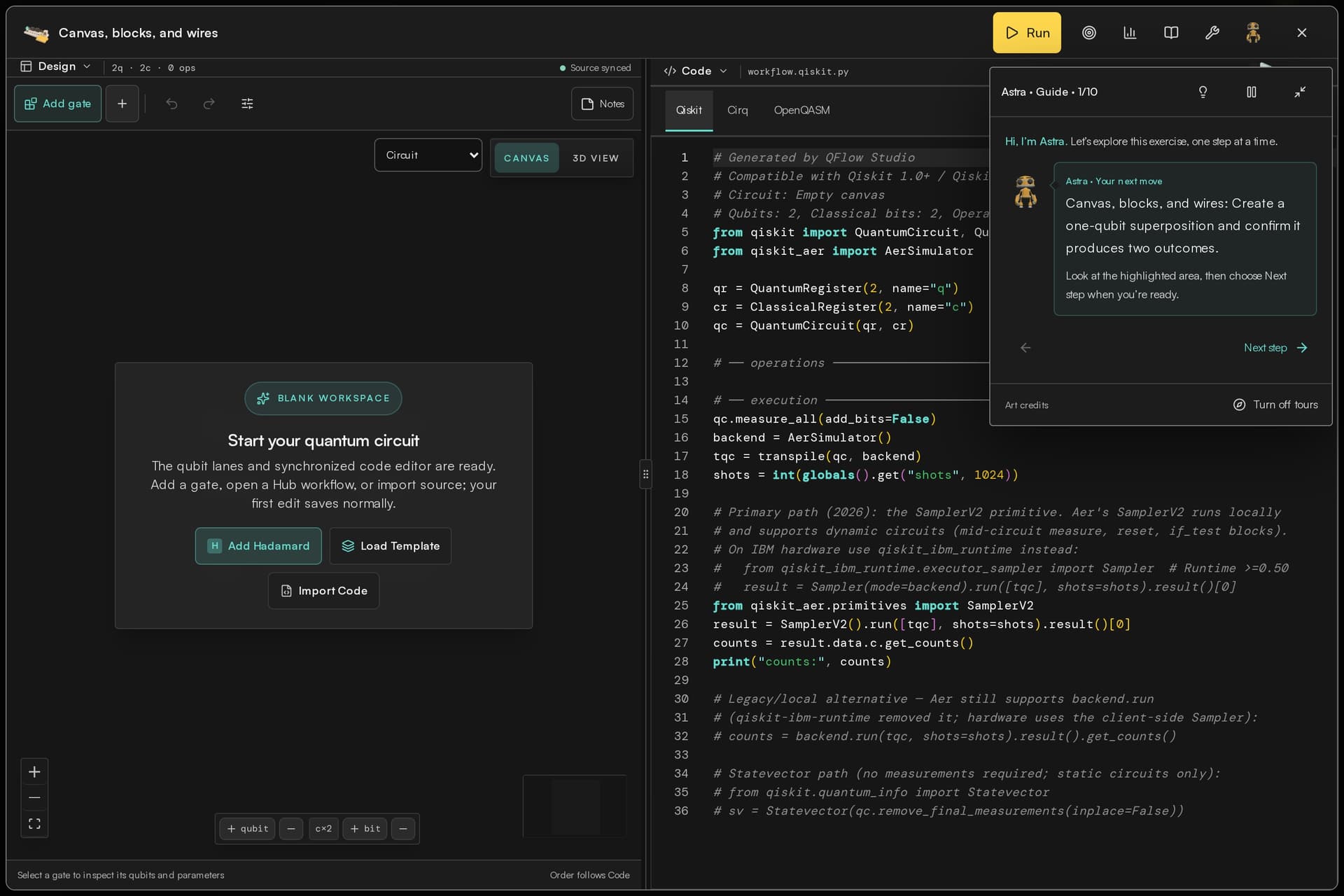
Keep the circuit, generated source, simulation notes, run state, and result evidence in one record.
Separate independent ecosystem references from affiliation, certification, replacement, or partner claims.
Link the reader to docs, source-backed analysis, or a bounded pilot only after the decision context is clear.
Questions this topic should answer
What is quantum workflow software?
Quantum workflow software should connect research, provider access, learning, security, and evidence instead of creating another disconnected tool. In QFlow, the practical record keeps the objective, circuit or model, simulation check, provider route, run status, result analysis, and reviewer-safe evidence together.
How should a team evaluate Quantum workflow software?
Start from this page intent: Quantum workflow software should connect research, provider access, learning, security, and evidence instead of creating another disconnected tool. Then verify whether the workflow can produce the outcomes listed here before moving into docs, analysis, or a pilot request.
Which ecosystems are relevant to quantum workflow software?
This page references Qiskit, AWS Braket, Azure Quantum, NVIDIA CUDA-Q, Quantinuum Nexus, Classiq as independent ecosystem context and links source notes so readers can verify terminology without confusing QFlow with an official provider claim.
01
Evaluation criteria
Look for workflow records, generated source, OpenQASM or SDK export, provider readiness, role boundaries, run history, and reviewer-safe evidence.
For education programs, also evaluate lesson progress, resource submission, certificates, and classroom-safe sharing.
02
Commercial search intent
Searchers using this phrase often want a checklist before a pilot or procurement conversation.
A helpful page should compare workflow stages and risks, not simply list brand names.
Independent ecosystem context
QFlow Studio is independent. IBM Quantum, Qiskit, AWS Braket, Azure Quantum, NVIDIA CUDA-Q, Cirq, Classiq, and Quantinuum Nexus are trademarks or products of their respective owners.
Qiskit
AWS Braket
Azure Quantum
NVIDIA CUDA-Q
Quantinuum Nexus
Classiq
Referenced only as ecosystem context for workflow, learning, routing, or comparison intent.
Source-backed terminology.
These public sources shape the terminology and search intent for this page.
Compare quantum platforms by the workflow stage they support: design, SDK, simulation, provider access, execution, collaboration, learning, and evidence.