CUDA-Q hybrid quantum workflow questions 2026
A Q&A for CUDA-Q, GPU-accelerated quantum simulation, CUDA-Q Realtime, QEC libraries, calibration, and hybrid CPU GPU QPU evidence.
3 chapters
8 focused sections
6 sources
primary links
3 signals
operating context
674 words
reviewed analysis
CUDA-Q hybrid quantum workflow questions in 2026 are really questions about heterogeneous systems: CPU orchestration, GPU simulation, QPU access, realtime control, QEC libraries, and AI-assisted calibration. QFlow should explain how teams keep those moving parts in one evidence record without implying NVIDIA endorsement.
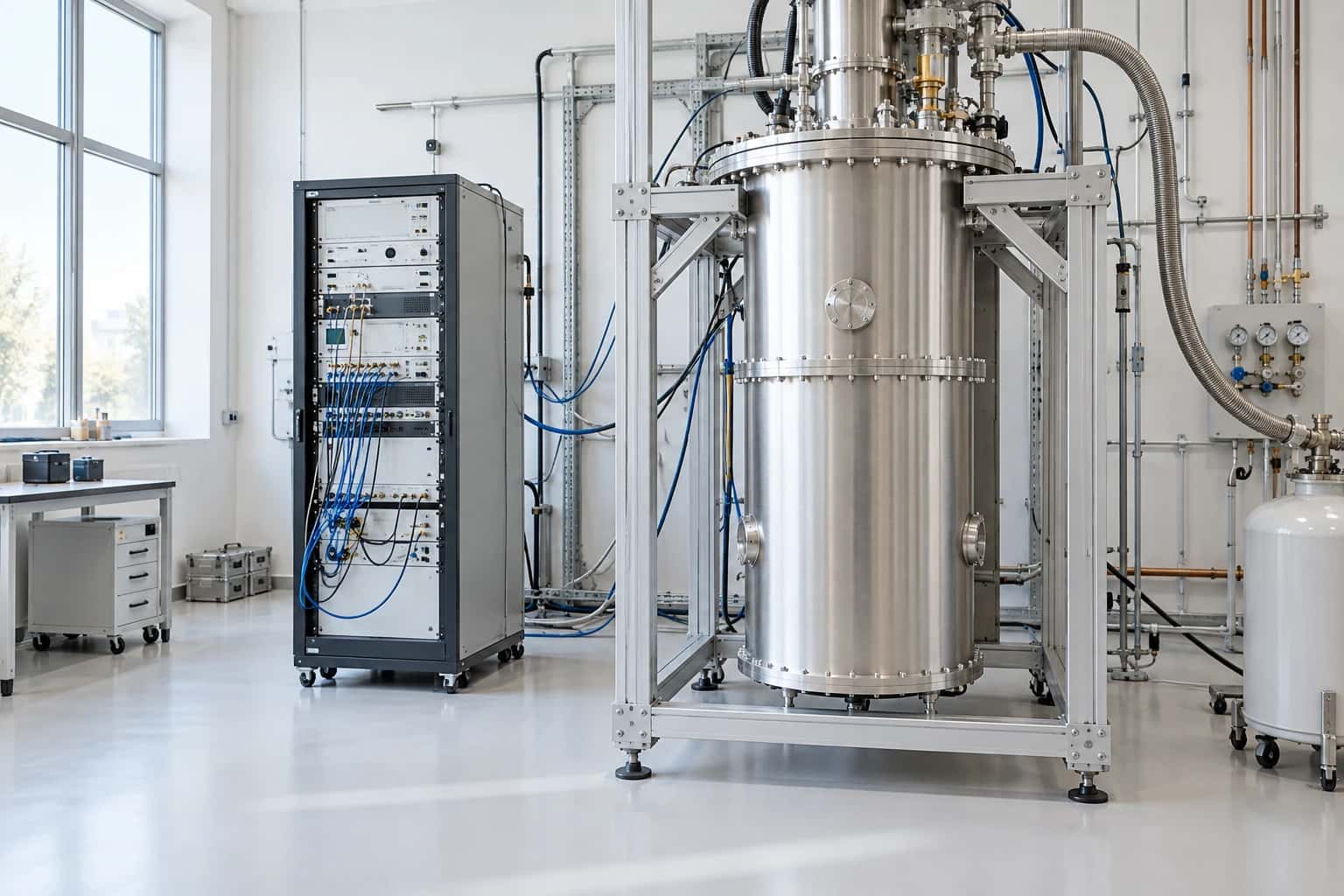
3
compute lanes
CPU, GPU, and QPU work together in hybrid workflows
2
control concerns
realtime execution and decoder latency affect evidence
1
route record
kernel, simulator, accelerator, and output remain connected
What is a CUDA-Q hybrid quantum workflow?
What is a CUDA-Q hybrid quantum workflow? It is a workflow where quantum kernels, classical control, GPU simulation, and possible QPU execution are part of one route. The searcher wants to know how CUDA-Q fits between SDK code, accelerated simulation, and hardware-facing work.
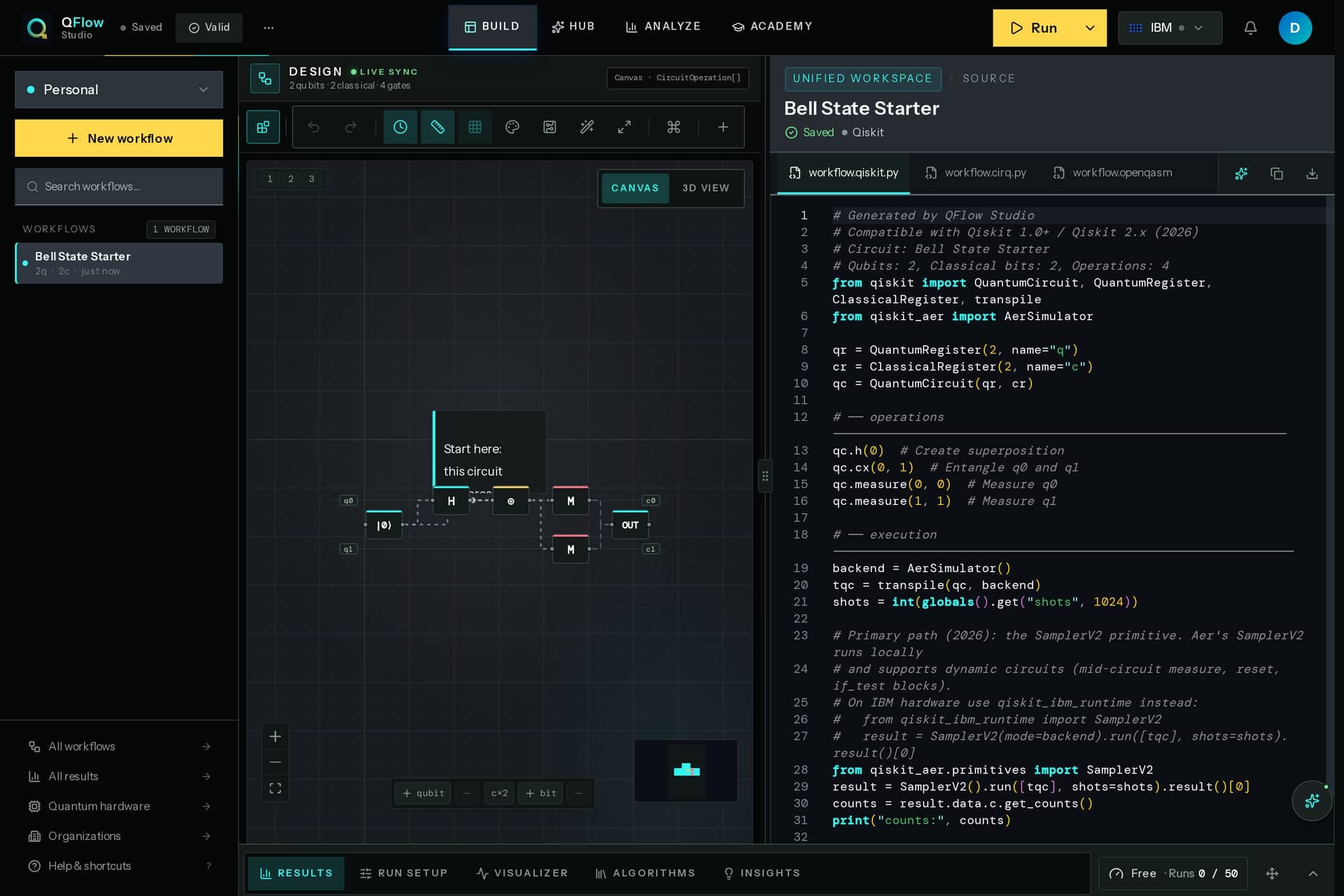
QFlow should answer by showing the workflow record: kernel or source model, simulator or backend, GPU resources, QPU route if used, result artifact, and reviewer note.
Realtime and QEC features make evidence more technical
CUDA-Q Realtime and QEC libraries make the route more than a batch script. Timing, decoder behavior, and control loops can influence what a result means. The article should explain that these are evidence fields, not hidden implementation details.
That lets the page answer advanced searches without overclaiming production readiness.
GPU simulation should be documented like a backend
A GPU simulation can be a serious workflow step, especially for pre-hardware comparison or algorithm iteration. But it must be labeled clearly as simulation, with configuration and version context.
QFlow can preserve that context so a later hardware run can be compared against the simulation path instead of treated as an unrelated experiment.
AI calibration belongs in the same map
NVIDIA Ising and QCalEval make calibration and decoding visible to a broader audience. The CUDA-Q workflow page should link to AI calibration content because model-assisted control affects how teams review future quantum runs.
The right structure is source-backed and bounded: describe the 2026 signal, then show what evidence a team should keep.
The guide should stay provider-neutral
QFlow can be useful to CUDA-Q users without claiming to be an NVIDIA product. The article should use independent guide language, cite official docs, and connect CUDA-Q concepts to broader workflow decisions.
That makes the page usable for humans, search engines, and AI retrieval systems.
What changes for the reader
CUDA-Q hybrid quantum workflow questions 2026 matters when it changes a decision the team can make now: which route to test, which assumption to record, which result to preserve, or which claim needs another source. The useful starting point is 3 compute lanes. Treat it as a question to verify, not a conclusion to repeat.
Start with NVIDIA CUDA-Q, compare the claim with the supporting sources, and label the boundary between current access, controlled research, and roadmap language. That keeps the article useful to technical leads and reviewers without flattening every source into the same confidence level.
Evidence to carry forward
A team should leave with a compact record: the source and review date, the claim being tested, the selected provider or simulator route, the expected artifact, and the fallback if the result is weak. Those details are enough to turn reading into a repeatable experiment without copying an entire article into the workspace.
Keep credentials, provider billing state, and private notes inside the account boundary. The shareable result should explain what was tested, what changed, and what still needs review.
The next decision
Choose one action that can be checked in the next review cycle: reproduce a result, compare two routes, update a learning module, or retire an assumption that no longer matches current access. Name an owner and a review date so the source trail does not become passive background reading.
If the evidence changes route selection, cost, security, or the expected artifact, update the related workflow and reviewer packet together. If it changes none of those things, keep it as context rather than creating extra process.
Questions this guide answers
Q01
What is a CUDA-Q hybrid quantum workflow?
It is a workflow that connects quantum kernels, classical orchestration, GPU simulation or acceleration, possible QPU execution, and reviewable output evidence.
Q02
How should teams document CUDA-Q GPU simulation?
Record simulator target, GPU context, source kernel, parameters, output, and how the result will be compared with any hardware route.
Q03
Does QFlow replace CUDA-Q?
No. QFlow is an independent workflow and evidence layer around teams using ecosystems such as CUDA-Q, Qiskit, Braket, and Azure Quantum.
Next step
Turn this research into a workflow pilot.
Use the same source-to-workflow logic inside the studio: brief, route, run, evidence, and review in one packet.