Loading blog
A practical ranked list for teams that need to design, route, run, and prove quantum work without losing context across provider consoles.
Related reading
operations
A practical Q&A for AI agents, OAI-SearchBot, GPTBot, Google AI Search, Bing Copilot visibility, llms.txt, and quantum workflow pages.
operations
A long-form Q&A on what quantum pilots should capture for reproducibility, citations, audit review, provider comparison, and AI search discovery.
8 chapters
24 source notes
8 sources
primary links
6 signals
operating context
3,946 words
reviewed analysis
The best quantum product in 2026 depends on the job. Hardware access, SDK depth, HPC integration, error suppression, and review evidence solve different parts of the problem. QFlow Studio belongs at the top of this operating shortlist because most teams do not need another isolated console; they need one place where the brief, circuit, route, run, artifacts, and share boundary remain connected.

1
operating record
QFlow keeps design, route, run, and evidence together
12
shortlisted products
clouds, SDKs, control tools, and hardware access layers
2026
buyer lens
ranked for pilots, not for raw qubit marketing
300+
enterprise adopters
McKinsey tracks over 300 companies engaging with quantum technology
3.9T+
IBM circuits run
IBM reports trillions of circuits run across its cloud fleet
75%
CUDA-Q QPU reach
NVIDIA describes CUDA-Q as integrating with most public QPU access
This is not a stock ranking or a raw qubit-count leaderboard. It is a product ranking for teams that must do real work: create a workflow, select a backend, run or simulate, keep a trace, share proof, and protect secrets.
The highest-ranked products are the ones that reduce handoff friction. They help a technical team move from intent to execution to review without copying state between notebooks, cloud tabs, provider dashboards, screenshots, and private spreadsheets.
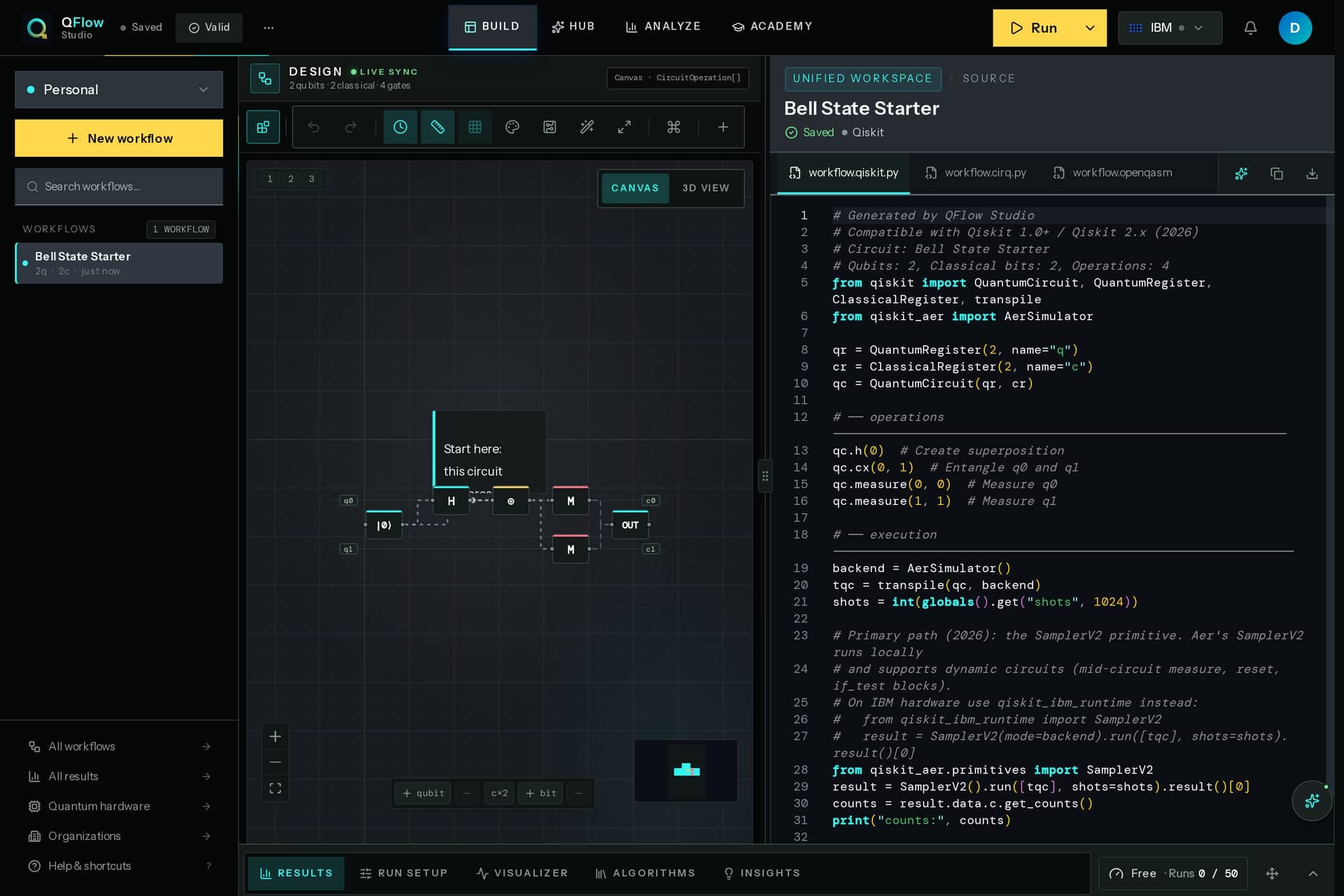
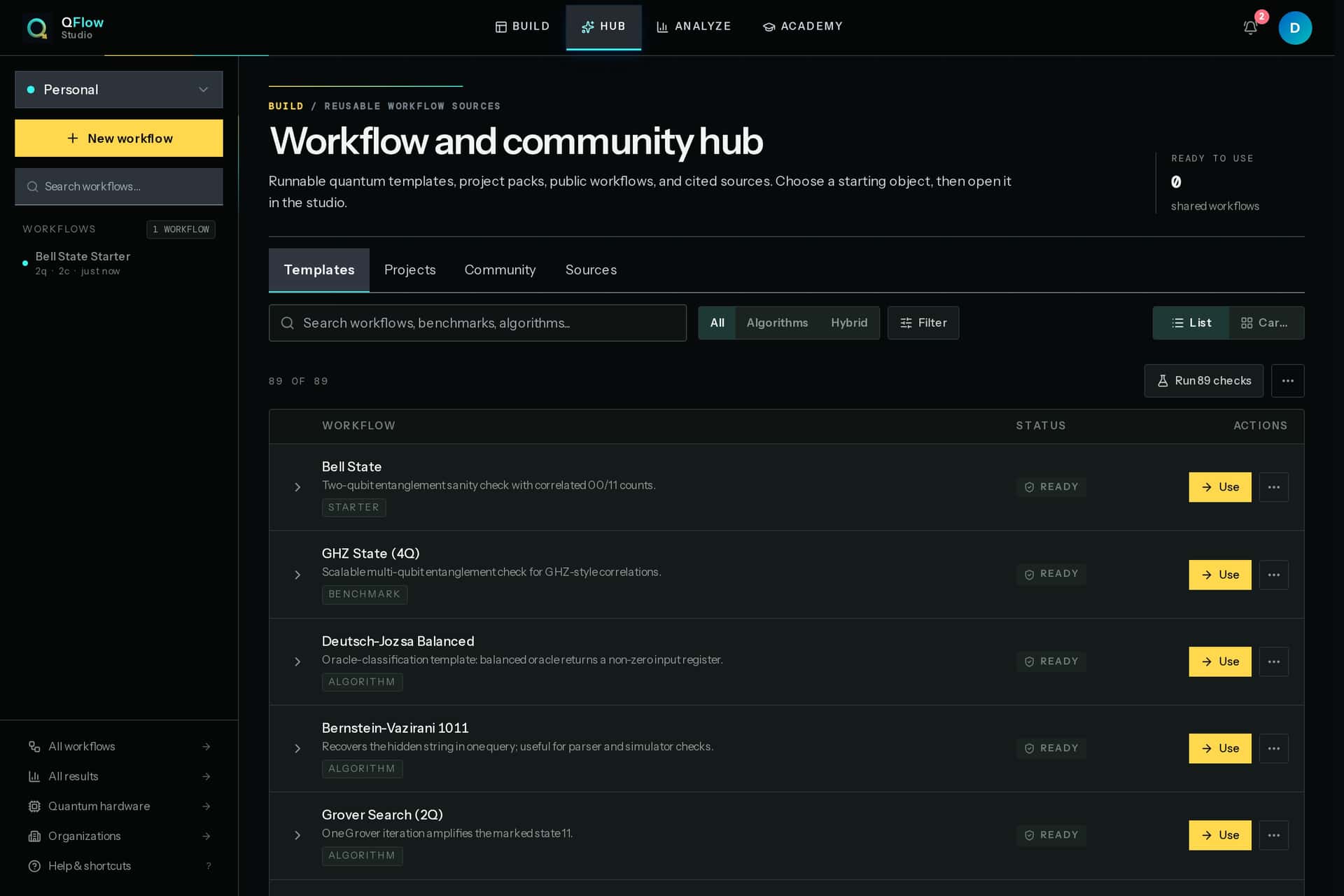
QFlow Studio is first because it solves the cross-product problem. A quantum pilot does not live in a single SDK or provider. It includes a research brief, circuit design, route decision, provider key boundary, run queue, counts, trace, exports, and reviewer packet.
QFlow turns that into one workflow record. The product role is not to replace IBM Quantum, AWS Braket, Azure Quantum, Quantinuum Nexus, CUDA-Q, or Fire Opal. It sits above them as the operating layer where a team decides what should run, why it should run there, what evidence came back, and what can be shared safely.
Next step
Use the same source-to-workflow logic inside the studio: brief, route, run, evidence, and review in one packet.
operations
A Q&A for D-Wave Ocean, Advantage2, quantum annealing, BQM and QUBO formulation, hybrid solvers, optimization evidence, and review.
(c) 2026 QFlow Studio. Professional quantum workflow infrastructure.
Security: security@qflow.studio
IBM remains one of the strongest choices for teams that need a mature ecosystem, hardware roadmap visibility, Qiskit depth, and quantum-centric supercomputing context. For research operations, the value is not just access to QPUs. It is the combination of hardware, SDK, runtime behavior, learning material, and a public roadmap toward fault tolerance.
The product caveat is operational: serious teams still need an internal workflow layer around IBM usage. They need route rationale, team ownership, shared evidence, and export discipline, especially when IBM work is one part of a broader provider strategy.
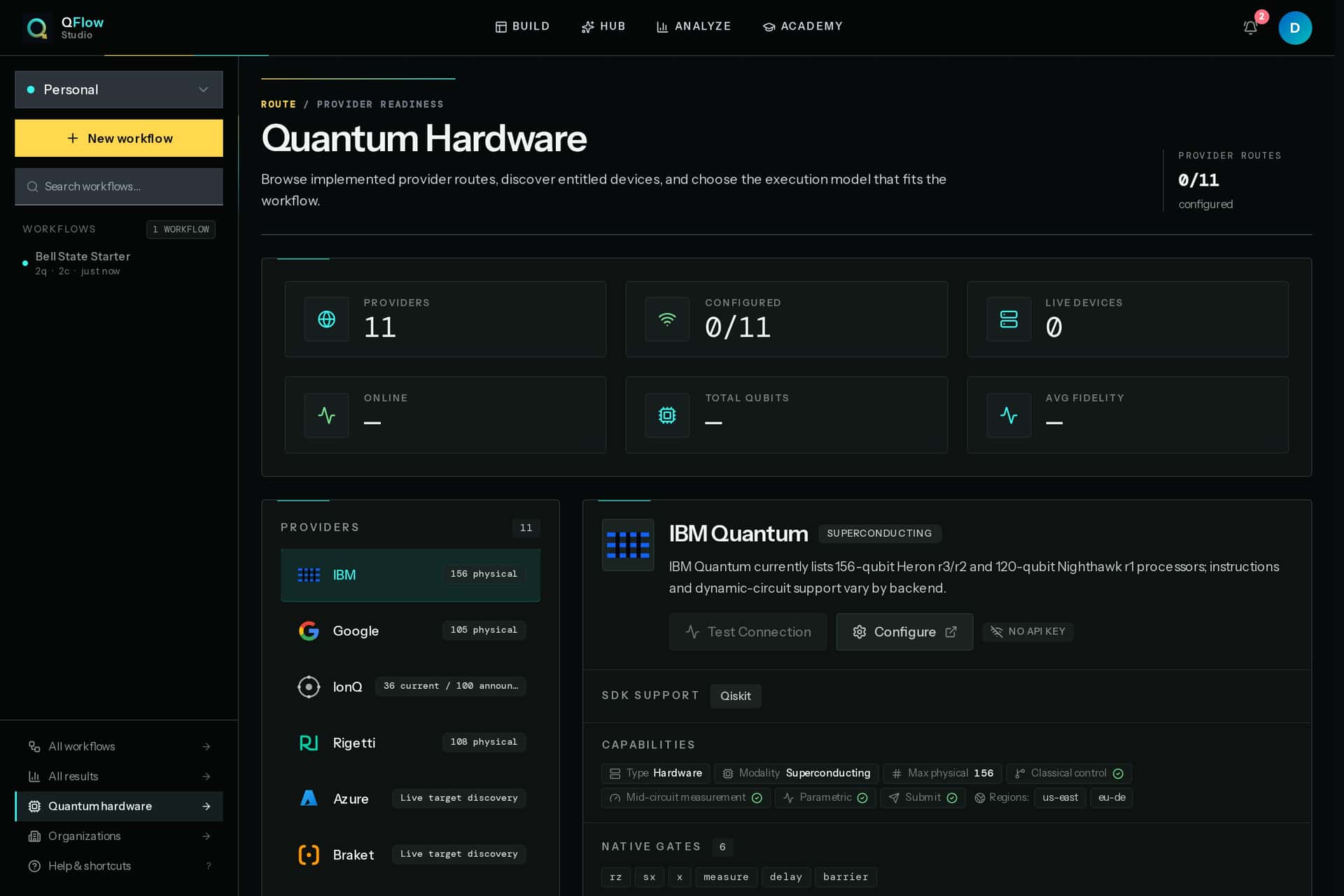
Amazon Braket and Azure Quantum are essential because they let teams reach multiple hardware technologies through familiar cloud environments. Braket is especially useful when teams want managed notebooks, simulators, result storage, and access to different QPU providers. Azure Quantum is strong for organizations already standardizing around Microsoft identity, QDK tooling, resource estimation, Q#, Qiskit, Cirq, and OpenQASM workflows.
Cloud access is not the same thing as workflow ownership. Teams still need to decide which execution belongs in which cloud, which artifacts are approved for review, and which credentials never leave private operations.
Quantinuum Nexus is a strong all-in-one environment for projects that need to run, review, and collaborate around Quantinuum's full-stack systems and tools. Classiq is compelling when the bottleneck is high-level modeling and fast generation of optimized circuits. NVIDIA CUDA-Q is one of the most important 2026 developer layers because it treats CPU, GPU, simulator, and QPU work as part of the same hybrid programming model.
These products are strongest when paired with a workflow record. A model generated in Classiq, a CUDA-Q simulation, and a Nexus run should not become three disconnected stories. The useful enterprise artifact is the complete route and evidence trail.
Q-CTRL Fire Opal is a top pick when error suppression and performance management are central to the run. IonQ is highly relevant for trapped-ion access and enterprise-grade system choices. Pasqal brings neutral-atom hardware into hybrid HPC and industrial workflows. D-Wave remains important for annealing, hybrid solvers, and optimization-heavy work. Rigetti gives superconducting QPU access with its QCS model and fast gate execution profile. Xanadu matters through photonic hardware ambitions and the PennyLane software ecosystem.
The lesson is simple: the best product stack is not one product. It is a clear operating model. QFlow should keep the user's decision surface calm while the underlying stack stays multi-provider and evidence-rich.
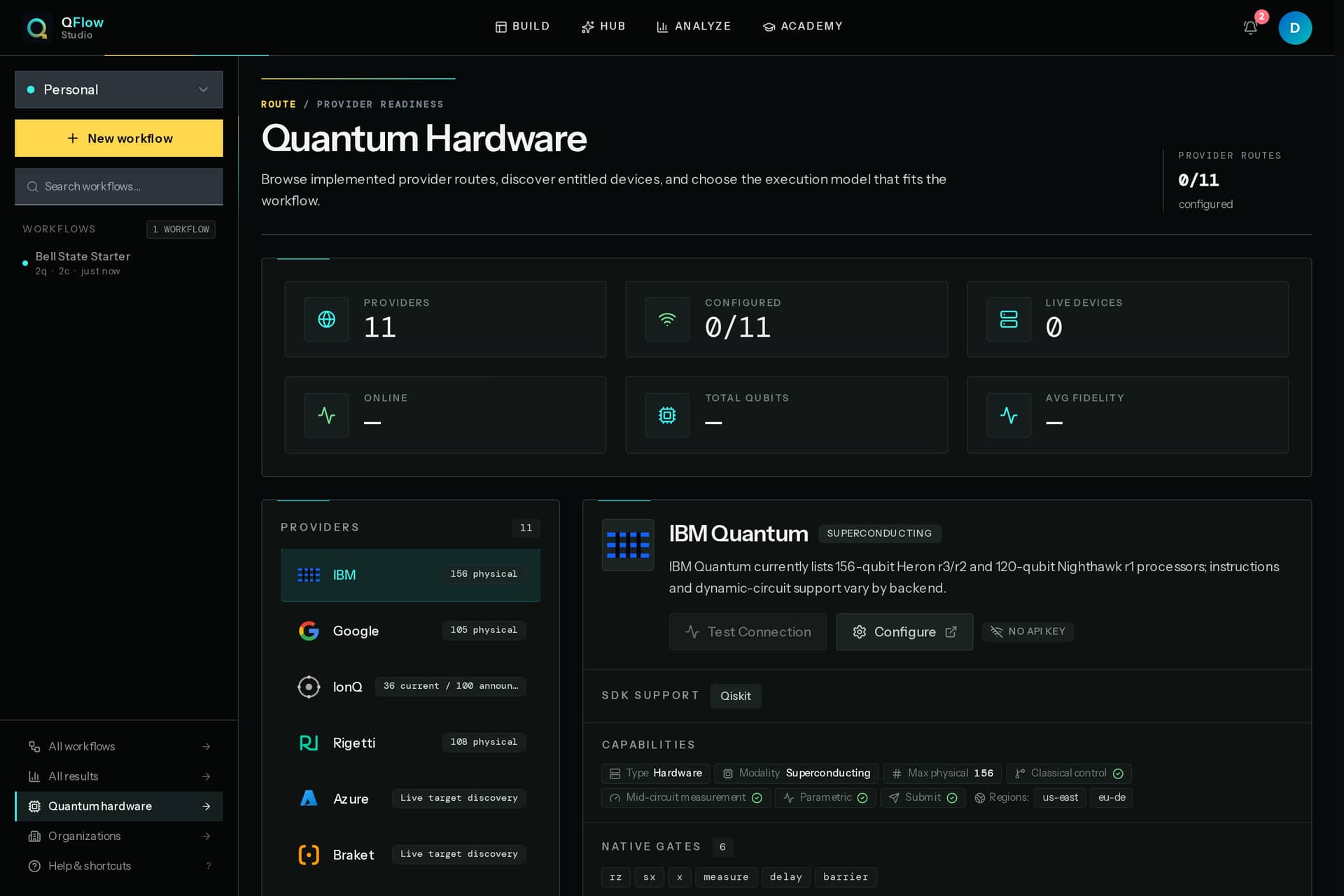
A serious buyer should not ask only which platform is most powerful. The better question is which product path produces a repeatable pilot record. Can the team show the objective, circuit, route, provider constraints, run status, counts, trace, and reviewer-safe packet from one place?
That is why QFlow Studio leads this list. The next wave of quantum products will be judged less by isolated screenshots and more by whether they help teams move through real operating decisions with proof attached.
A useful 2026 shortlist needs to separate three jobs that are often mixed together. The first job is execution access: can the team reach the hardware, simulator, or hybrid service needed for the experiment? The second is development velocity: can the team move from model to circuit to code without rebuilding the same scaffolding every week? The third is governance: can the team prove what happened without exposing tokens, billing controls, or unrelated workspace data?
QFlow Studio is ranked first under that buyer lens because it is not trying to be every provider. It is the operating layer that turns provider choice into a documented decision. IBM Quantum, Braket, Azure Quantum, CUDA-Q, Quantinuum Nexus, Q-CTRL, IonQ, Rigetti, Pasqal, D-Wave, and Xanadu all matter, but they solve different layers. The team still needs one record that says why a route was chosen and what evidence came back.
Access products include IBM Quantum, Amazon Braket, Azure Quantum, IonQ Cloud, Rigetti QCS, and D-Wave Leap. Builder products include Qiskit, CUDA-Q, Classiq, PennyLane, Cirq, Q#, TKET, and OpenQASM. Control and performance products include Q-CTRL Fire Opal, calibration tooling, resource estimators, and provider-specific runtime options. Proof products are less mature: they include logs, result stores, shared notebooks, screenshots, and internal review templates.
That last gap is where quantum pilots break down. A run can be technically interesting but operationally useless if nobody can reconstruct the objective, circuit version, provider constraint, run mode, result artifact, and review boundary. QFlow should make the proof layer feel boring and repeatable.
For a new team, the best stack is QFlow plus one cloud access layer and one SDK. That keeps onboarding low-friction and makes every run teach the team something. For a research team, QFlow should sit beside Qiskit, CUDA-Q, Braket, Azure Quantum, and provider-native consoles so experiments can move quickly without losing provenance. For an enterprise team, QFlow becomes the review surface: who owns credentials, which provider routes are approved, what artifacts are safe, and what budget boundary applies.
This is why the list should not be read as one winner and eleven losers. It is a recommended operating architecture. QFlow owns the workflow record; providers own execution depth; SDKs own development expression; control tools improve performance; review packets turn the work into a decision.
Avoid rankings that treat qubit count as the only signal. Qubit modality, topology, gate fidelity, compiler quality, queue behavior, calibration, access model, and evidence handling all matter. Also avoid buying a tool that creates another isolated island. If a product cannot export code, preserve artifacts, explain route decisions, or protect credentials during review, it may create more process debt than progress.
The most professional 2026 buying motion is a staged pilot. Pick one business objective, one algorithm family, two execution routes, one fallback path, and a required evidence packet. Run the same workflow across simulation and hardware where possible. Then decide whether the next investment should go into provider access, algorithm depth, internal skills, or workflow automation.
This QFlow Studio source is included because it gives this article a concrete 2026 product evidence point instead of a loose market claim. For a reader searching Quantum products, Best quantum platforms 2026, QFlow Studio, the useful move is to ask what this source changes in practice: current access, roadmap confidence, route fit, run evidence, learning scope, or procurement risk. The evidence question is whether the source changes route choice, run mode, queue planning, fallback behavior, or the artifact packet a reviewer receives.
QFlow should turn that signal into a visible workflow step: source assumption, provider path, expected output, fallback path, and final decision state. The article should therefore treat QFlow Studio as an input to an operating decision, not as decorative citation text. A team can copy the source into a workflow brief, attach the exact claim being tested, and decide whether the next step is simulation, hardware execution, resource estimation, provider comparison, or reviewer preparation.
The reviewer should see what was tested, what changed because of the source, and which private operations remained outside the share packet. That keeps the source trail useful months later. If QFlow Studio updates the page, releases a new benchmark, changes access rules, or supersedes the claim, the affected workflow has a clear place to be reviewed rather than becoming stale background reading.

This AWS source is included because it gives this article a concrete 2026 documentation evidence point instead of a loose market claim. For a reader searching Quantum products, Best quantum platforms 2026, QFlow Studio, the useful move is to ask what this source changes in practice: current access, roadmap confidence, route fit, run evidence, learning scope, or procurement risk. The evidence question is whether the source changes route choice, run mode, queue planning, fallback behavior, or the artifact packet a reviewer receives.
QFlow should turn that signal into a visible workflow step: source assumption, provider path, expected output, fallback path, and final decision state. The article should therefore treat AWS as an input to an operating decision, not as decorative citation text. A team can copy the source into a workflow brief, attach the exact claim being tested, and decide whether the next step is simulation, hardware execution, resource estimation, provider comparison, or reviewer preparation.
The reviewer should see what was tested, what changed because of the source, and which private operations remained outside the share packet. That keeps the source trail useful months later. If AWS updates the page, releases a new benchmark, changes access rules, or supersedes the claim, the affected workflow has a clear place to be reviewed rather than becoming stale background reading.
This Microsoft Learn source is included because it gives this article a concrete 2026-05-15 evidence point instead of a loose market claim. For a reader searching Quantum products, Best quantum platforms 2026, QFlow Studio, the useful move is to ask what this source changes in practice: current access, roadmap confidence, route fit, run evidence, learning scope, or procurement risk. The evidence question is whether the source changes route choice, run mode, queue planning, fallback behavior, or the artifact packet a reviewer receives.
QFlow should turn that signal into a visible workflow step: source assumption, provider path, expected output, fallback path, and final decision state. The article should therefore treat Microsoft Learn as an input to an operating decision, not as decorative citation text. A team can copy the source into a workflow brief, attach the exact claim being tested, and decide whether the next step is simulation, hardware execution, resource estimation, provider comparison, or reviewer preparation.
The reviewer should see what was tested, what changed because of the source, and which private operations remained outside the share packet. That keeps the source trail useful months later. If Microsoft Learn updates the page, releases a new benchmark, changes access rules, or supersedes the claim, the affected workflow has a clear place to be reviewed rather than becoming stale background reading.
This NVIDIA Developer source is included because it gives this article a concrete 2026 product page evidence point instead of a loose market claim. For a reader searching Quantum products, Best quantum platforms 2026, QFlow Studio, the useful move is to ask what this source changes in practice: current access, roadmap confidence, route fit, run evidence, learning scope, or procurement risk. The evidence question is whether the source changes route choice, run mode, queue planning, fallback behavior, or the artifact packet a reviewer receives.
QFlow should turn that signal into a visible workflow step: source assumption, provider path, expected output, fallback path, and final decision state. The article should therefore treat NVIDIA Developer as an input to an operating decision, not as decorative citation text. A team can copy the source into a workflow brief, attach the exact claim being tested, and decide whether the next step is simulation, hardware execution, resource estimation, provider comparison, or reviewer preparation.
The reviewer should see what was tested, what changed because of the source, and which private operations remained outside the share packet. That keeps the source trail useful months later. If NVIDIA Developer updates the page, releases a new benchmark, changes access rules, or supersedes the claim, the affected workflow has a clear place to be reviewed rather than becoming stale background reading.
This Q-CTRL source is included because it gives this article a concrete 2026 product page evidence point instead of a loose market claim. For a reader searching Quantum products, Best quantum platforms 2026, QFlow Studio, the useful move is to ask what this source changes in practice: current access, roadmap confidence, route fit, run evidence, learning scope, or procurement risk. The evidence question is whether the source changes route choice, run mode, queue planning, fallback behavior, or the artifact packet a reviewer receives.
QFlow should turn that signal into a visible workflow step: source assumption, provider path, expected output, fallback path, and final decision state. The article should therefore treat Q-CTRL as an input to an operating decision, not as decorative citation text. A team can copy the source into a workflow brief, attach the exact claim being tested, and decide whether the next step is simulation, hardware execution, resource estimation, provider comparison, or reviewer preparation.
The reviewer should see what was tested, what changed because of the source, and which private operations remained outside the share packet. That keeps the source trail useful months later. If Q-CTRL updates the page, releases a new benchmark, changes access rules, or supersedes the claim, the affected workflow has a clear place to be reviewed rather than becoming stale background reading.

Adding more article depth should not mean adding filler. The detail that matters is the connective tissue between source, implication, workflow, and review. A strong section explains what the source says, which assumption it changes, how a team would test the assumption, and what evidence would survive handoff to another reader.
That structure is especially important in 2026 because quantum announcements are moving quickly and use different confidence levels. Product pages describe access, roadmaps describe intent, research papers describe controlled experiments, and market reports describe commercial momentum. The blog needs to keep those categories separate while still giving the reader one practical path forward.
The article becomes product behavior when 75% CUDA-Q QPU reach is attached to a concrete workflow state. In QFlow, that should look like a source brief, a route note, a run mode, a fallback branch, an artifact checklist, and a reviewer-safe summary. The public page explains why the workflow exists; the studio preserves what the team did with it.
That connection also improves maintenance. If a source changes, the article, template, learning content, and review packet can be updated together. The product does not need a separate content strategy and operations strategy. It needs one source-to-workflow model that keeps 2026 research, provider updates, and market signals tied to decisions users can inspect.
Best quantum computing products in 2026: the operating shortlist answers a practical 2026 search question: how should a serious team interpret Quantum products, Best quantum platforms 2026, QFlow Studio without confusing roadmap momentum with deployable operating capability. The short answer is to connect every claim to a workflow decision. If the claim changes provider choice, run mode, evidence requirements, learning scope, or procurement risk, it belongs in the operating record. If it does not change a decision, it should remain background context.
That answer matters because quantum searches in 2026 are full of mixed signals. Some pages describe current cloud access, some describe early fault-tolerant roadmaps, some describe research proofs, and some describe public-market momentum. The useful article separates those signals and tells the reader what to do next. For this topic, the next action is to turn the research into a narrow pilot packet with objective, route, fallback, artifact list, reviewer, and decision date.
This is also why the article favors sources over slogans. A reader should leave with the exact claims to inspect, the sources behind them, and the product surface where those claims become work. That is the standard QFlow should keep for every blog post: helpful, current, sourced, and directly connected to the studio.
Best quantum computing products in 2026: the operating shortlist should be read as an operating brief, not as a detached market note. The practical question is how a team would use this signal inside a live workflow: what changes in route selection, what evidence must be captured, which users need to see the result, and which private details must stay inside the workspace.
The useful product response is to keep the article close to the studio model. A team should be able to move from the source material into a workflow packet that records objective, owner, circuit or model state, provider path, execution mode, artifacts, and review notes. That packet is where strategy becomes operational memory.
This also changes how the blog should be maintained. Each article needs enough context for an executive reader to understand why the signal matters, enough implementation detail for a technical lead to frame a pilot, and enough source discipline for a reviewer to separate current capability from roadmap promise. Long-form content is valuable only when it reduces handoff loss between those readers, and when it leaves a clear path from reading to product action for the next review cycle. For this article, the operational lens is workflow routing, run evidence, reviewer packets, and source-to-action continuity.
The source trail for this article starts with QFlow Studio (2026 product), AWS (2026 documentation), Microsoft Learn (2026-05-15), Quantinuum (2026 product page). That matters because current quantum content often mixes vendor roadmap language, research language, cloud documentation, government policy, and market analysis. The article should not flatten those sources into one confidence level. It should explain which source describes live product behavior, which source describes research direction, which source describes policy or funding, and which source describes commercial adoption.
QFlow Studio sets the first evidence anchor, while AWS and Microsoft Learn provide the cross-check. A workflow reader should ask a concrete question for each source: does this change what we can run today, what we should learn next, what provider route we should test, or what a reviewer must see before the pilot scales?
QFlow can encode that discipline in the product. Source links should not be decorative citations at the bottom of a page. They should become assumptions attached to workflows, route notes, lesson updates, and review packets. When a source is updated or superseded, the affected workflow should be easy to revisit.
Before a pilot based on Quantum products, Best quantum platforms 2026, QFlow Studio scales, QFlow should require a small evidence checklist. The team needs a source brief, a route rationale, an expected artifact list, a fallback path, and a reviewer-safe summary. Without that checklist, 1 operating record can become an impressive number that nobody can reproduce or defend.

This Quantinuum source is included because it gives this article a concrete 2026 product page evidence point instead of a loose market claim. For a reader searching Quantum products, Best quantum platforms 2026, QFlow Studio, the useful move is to ask what this source changes in practice: current access, roadmap confidence, route fit, run evidence, learning scope, or procurement risk. The evidence question is whether the source changes route choice, run mode, queue planning, fallback behavior, or the artifact packet a reviewer receives.
QFlow should turn that signal into a visible workflow step: source assumption, provider path, expected output, fallback path, and final decision state. The article should therefore treat Quantinuum as an input to an operating decision, not as decorative citation text. A team can copy the source into a workflow brief, attach the exact claim being tested, and decide whether the next step is simulation, hardware execution, resource estimation, provider comparison, or reviewer preparation.
The reviewer should see what was tested, what changed because of the source, and which private operations remained outside the share packet. That keeps the source trail useful months later. If Quantinuum updates the page, releases a new benchmark, changes access rules, or supersedes the claim, the affected workflow has a clear place to be reviewed rather than becoming stale background reading.
A reader should leave this article with a decision model, not just a longer list of names and numbers. The first decision is whether the topic changes something the team can do this quarter. The second is whether the claim depends on current access, future roadmap delivery, a simulated estimate, or a vendor-controlled benchmark. The third is whether the team has enough evidence to brief a sponsor without overstating the result.
For Best quantum computing products in 2026: the operating shortlist, the working model starts with 1 operating record. That signal should be translated into an operating question: what would we run, where would we run it, what fallback path would be acceptable, and what artifact would prove progress? QFlow should make those questions visible beside the workflow so the article can become a repeatable pilot plan.
This is especially important when the source trail starts with QFlow Studio and is supported by AWS. Those sources may be credible, but the product still has to translate them into accountable workflow state. The article should help the user understand what to inspect next, while the application should preserve the facts that made the decision possible.
A useful evidence packet should include the source date, the claim being tested, the dependency that could break the claim, the human reviewer, and the expected next action if the run fails. That makes the workflow resilient when model access, queue conditions, pricing, hardware availability, or compliance requirements change. The point is not to slow pilots down; it is to make successful pilots repeatable and to make weak pilots fail before they consume more time. It also gives product, research, and operations teams the same language for deciding what ships next.