 Featured analysis
QFlow News & Research
Product news and current quantum workflow analysis.
Follow QFlow product releases, community pilots, and sourced 2026 reads on provider readiness, hybrid execution, review evidence, and the operating layer quantum teams need.
Featured analysis3 chapters6 sources8 images
education2026-09-025 min read
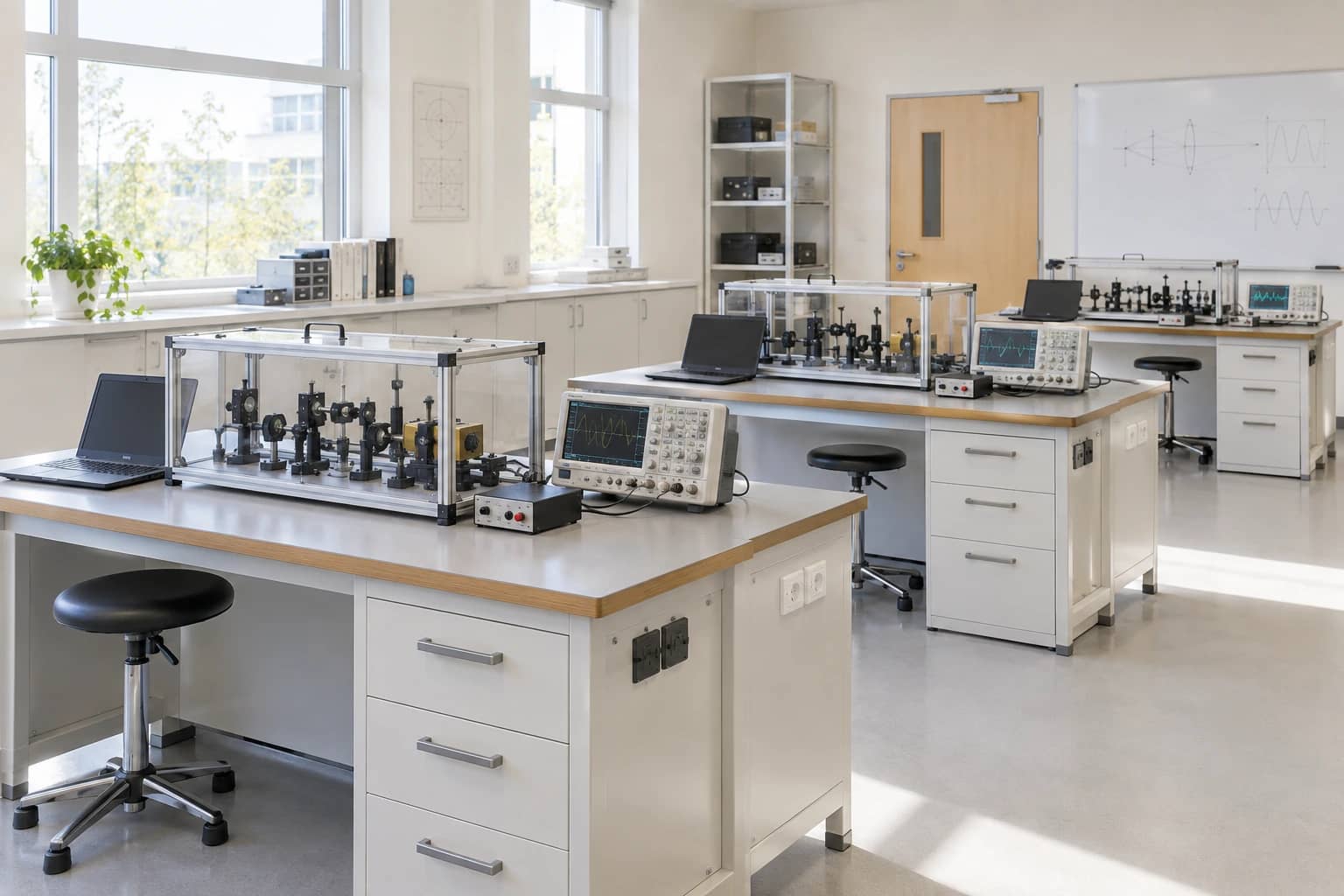
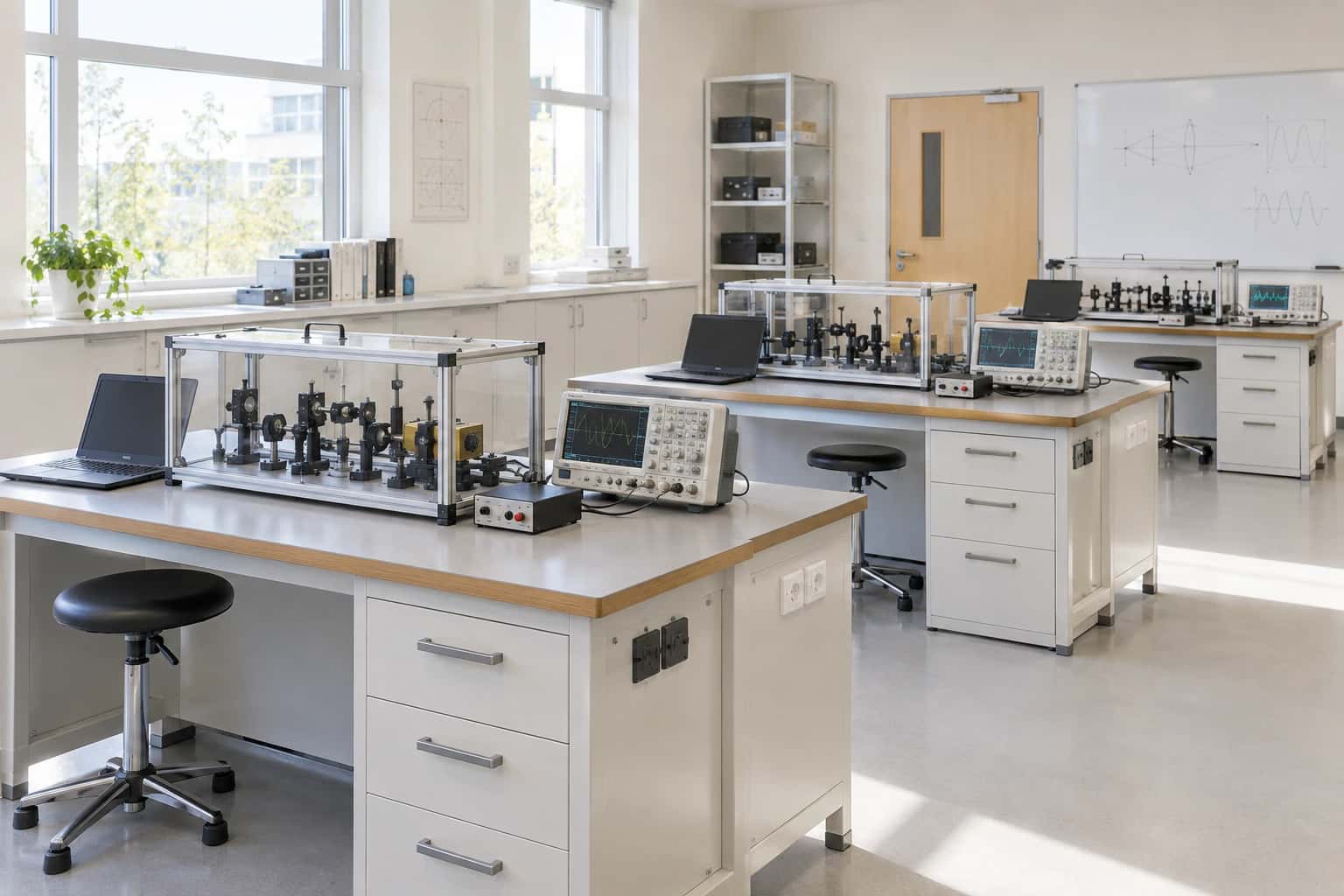
QFlow begins a community test pilot with Quantum Hacettepe
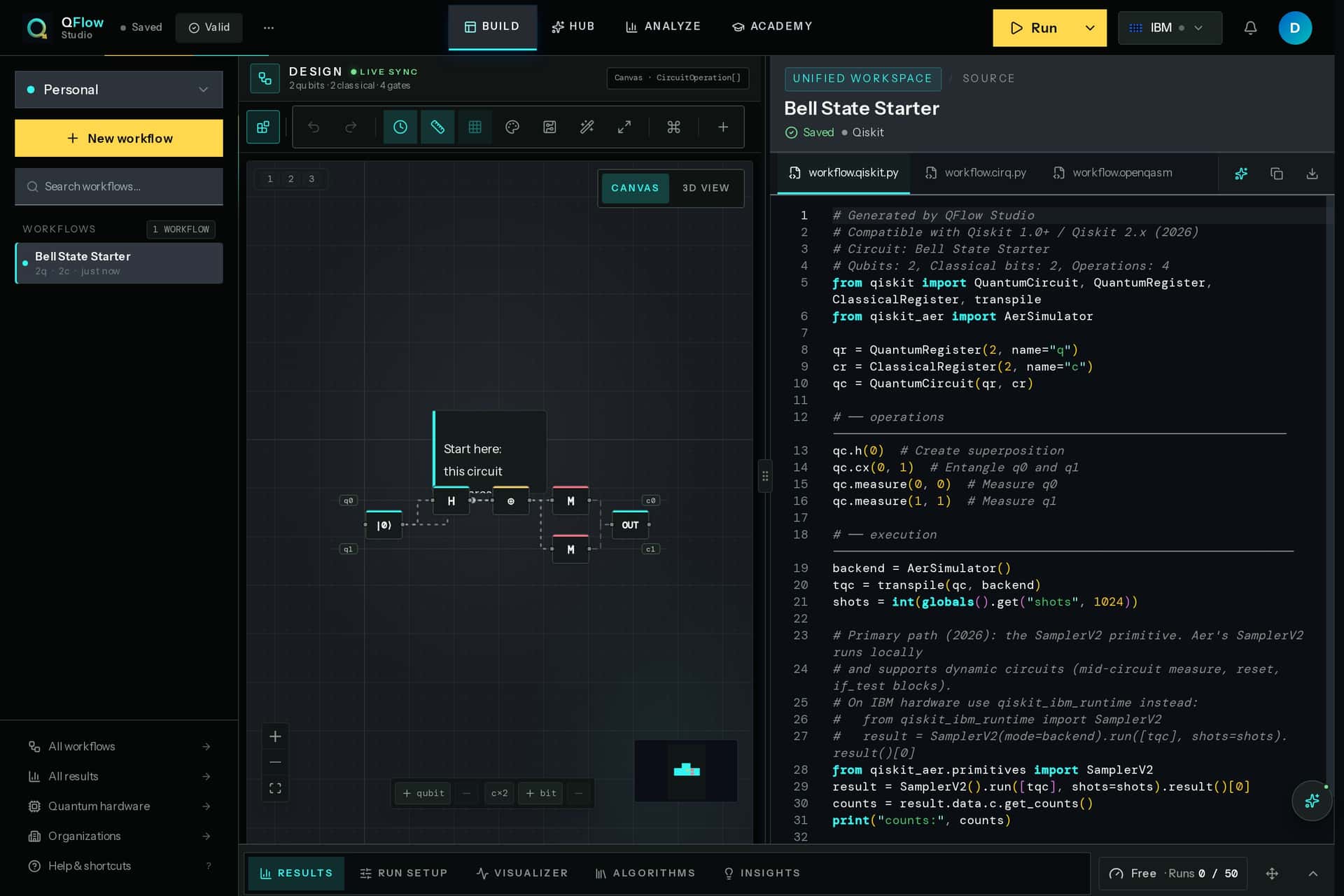
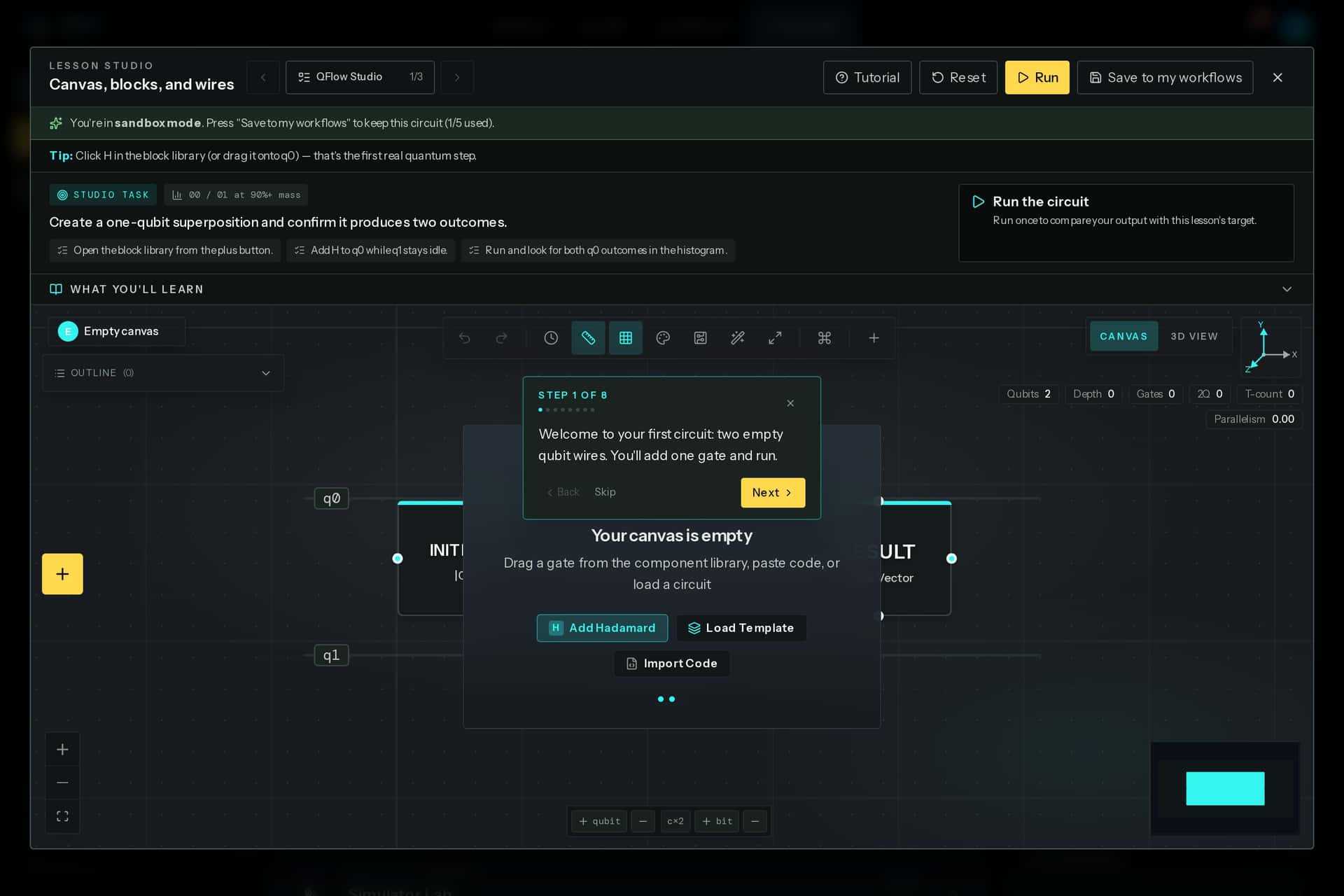
The scoped pilot will test how visual circuits, synchronized code, simulation evidence, and guided learning hold up in real student-team workflows.
QFlow Studio and the Quantum Hacettepe student community are beginning a bounded test pilot focused on the daily work between learning a circuit and producing reviewable run evidence. Participants will work with the same circuit in Design and Code, use simulation before scarce hardware, and record concrete feedback on clarity, reliability, and team handoff. The pilot is a community product-testing program; it does not represent a university-wide deployment or institutional endorsement by Hacettepe University.
What this covers
Why this pilot existsWhat participants will actually testHow feedback becomes a product decision

QFlow NewsQuantum HacettepeQuantum educationQuantum workflow
Research library
Showing 31-36 of 36 guides, 10 articles per page.
8 images
education2026-05-266 min read
Quantum computing research in 2026: the signals that matter
The most useful 2026 research signals point toward error correction, neutral atoms, quantum-centric supercomputing, AI-assisted calibration, and cleaner evidence loops.
The research center of gravity is shifting from isolated demonstrations toward systems engineering. Error correction, calibration, real-time control, neutral-atom scaling, and hybrid supercomputing are becoming operational topics. That makes product design more important: teams need interfaces that explain not just what the circuit is, but what evidence proves it behaved well enough to trust.
What this covers
Error correction is becoming an operating problemNeutral atoms moved from alternative path to strategic pathAI is entering the quantum control layer
8 images
workflow2026-05-268 min read
Best quantum computing products in 2026: the operating shortlist
A practical ranked list for teams that need to design, route, run, and prove quantum work without losing context across provider consoles.
The best quantum product in 2026 depends on the job. Hardware access, SDK depth, HPC integration, error suppression, and review evidence solve different parts of the problem. QFlow Studio belongs at the top of this operating shortlist because most teams do not need another isolated console; they need one place where the brief, circuit, route, run, artifacts, and share boundary remain connected.
What this covers
How this shortlist is ranked1. QFlow Studio - best operating layer for quantum workflows2. IBM Quantum and Qiskit - best deep research and hardware platform

8 images
education2026-05-255 min read
Provider roadmaps make pilot readiness a board-level question
IonQ and Pasqal's public roadmaps show why enterprise teams should evaluate qubit quality, topology, access model, and evidence flow together.
Quantum pilots are no longer just developer experiments. Roadmaps now discuss logical qubits, topology, fault-tolerance paths, and industrial value. Teams need a way to compare provider readiness without turning the product into a spreadsheet.
What this covers
Roadmaps should influence workflow designEducation and operations now meetPilot packets should be comparable

8 images
operations2026-05-254 min read
Hybrid quantum teams are optimizing iteration loops
Classiq's CUDA-Q integration and Quantinuum Nexus both point to a 2026 product theme: shorten the path from model to execution to review.
The 2026 interface problem is not just circuit editing. Teams need faster loops across high-level modeling, synthesis, simulator or GPU execution, hardware submission, and review. That requires one product rhythm instead of disconnected tools.
What this covers
The bottleneck is handoff frictionCollaboration is an execution featureUse presets, not empty canvases

8 images
hardware2026-05-254 min read
Hardware evidence is becoming the buyer's interface
Q-CTRL's 2026 materials result and IBM platform updates show why provider readiness, error suppression, and artifact trails need first-class product surfaces.
Near-term quantum value depends on a chain of operational proof: backend choice, shot budget, error-aware compilation, runtime behavior, and a clear comparison boundary. That proof has to be visible enough for technical teams and legible enough for business review.
What this covers
Do not hide the preflightEvidence needs boundariesError-aware work belongs in the same view
8 images
workflow2026-05-255 min read
Quantum-centric workflows need an operating layer, not another notebook
IBM's 2026 reference architecture puts orchestration, shared storage, and coordinated quantum-classical work at the center of practical adoption.
Quantum teams are moving from isolated circuit experiments toward coordinated workflows that blend QPUs, CPUs, GPUs, queues, learning, logs, and evidence. The product implication is clear: the interface should show route, execution, and review context as one operating record.
What this covers
The practical unit is the workflowControl planes must stay readableEvidence is part of operations
Complete crawlable archive
Every published analysis, linked from one maintained index.
Pagination keeps the visual library manageable. This compact archive keeps every canonical article directly discoverable for readers, search engines, and retrieval tools.
- 01education · 2026-09-02QFlow begins a community test pilot with Quantum Hacettepe
- 02education · 2026-06-02Quantum learning platform workflows 2026: lessons to proof
- 03workflow · 2026-06-02Quantum circuit workflow builder 2026: visual blocks to code
- 04workflow · 2026-06-02QFlow quantum workflow software 2026: canvas to proof
- 05workflow · 2026-06-02What is quantum workflow software? 2026 operating guide
- 06hardware · 2026-06-02Quantum RF sensing for defense 2026: field-ready evidence
- 07operations · 2026-06-02Quantum telecom networks 2026: QKD, PQC, and 6G evidence
- 08education · 2026-06-02Quantum healthcare and drug discovery 2026: evidence map
- 09education · 2026-06-02Quantum biology and CRISPR workflows 2026: hype-free guide
- 10hardware · 2026-06-02Quantum AI control plane 2026: calibration, QML, and proof
- 11operations · 2026-05-30AI agents for quantum workflows 2026: calibration to proof
- 12operations · 2026-05-30Quantum pilot evidence packet questions 2026
- 13operations · 2026-05-30D-Wave quantum annealing workflow questions 2026
- 14workflow · 2026-05-30Classiq Qmod quantum workflow questions 2026
- 15hardware · 2026-05-30Quantinuum Nexus and pytket workflow questions 2026
- 16education · 2026-05-30Cirq and OpenFermion workflow questions 2026
- 17hardware · 2026-05-30CUDA-Q hybrid quantum workflow questions 2026
- 18workflow · 2026-05-30Azure Quantum resource estimation questions 2026
- 19workflow · 2026-05-30Amazon Braket Hybrid Jobs workflow questions 2026
- 20workflow · 2026-05-30Qiskit Runtime workflow questions 2026: evidence guide
- 21operations · 2026-05-30Post-quantum security migration evidence 2026
- 22hardware · 2026-05-30Dynamic quantum circuit benchmarking 2026: real workflows
- 23hardware · 2026-05-30AI for quantum calibration and control: 2026 workflow layer
- 24hardware · 2026-05-30Quantum error correction roadmap 2026: qLDPC and decoders
- 25education · 2026-05-30Quantum research categories 2026: what teams should track
- 26operations · 2026-05-30Qiskit, Braket, Azure, and CUDA-Q workflow comparison 2026
- 27education · 2026-05-30Quantum learning workflows 2026: teach with real evidence
- 28workflow · 2026-05-30Quantum workflow operating questions 2026: route to proof
- 29workflow · 2026-05-26Quantum computing developments in 2026: the operating picture
- 30operations · 2026-05-26Highest-valued quantum computing companies in 2026
- 31operations · 2026-05-26The most important quantum computing companies in 2026
- 32education · 2026-05-26Quantum computing research in 2026: the signals that matter
- 33workflow · 2026-05-26Best quantum computing products in 2026: the operating shortlist
- 34education · 2026-05-25Provider roadmaps make pilot readiness a board-level question
- 35operations · 2026-05-25Hybrid quantum teams are optimizing iteration loops
- 36hardware · 2026-05-25Hardware evidence is becoming the buyer's interface
- 37workflow · 2026-05-25Quantum-centric workflows need an operating layer, not another notebook
Editorial standard
Source material should read like a decision guide.
The blog favors primary links, maintained articles, visual evidence, and chaptered analysis over short disconnected blocks.